Kitchen & Dining
He learned where she kept the spare key under the little tray by the entry.
She had handed him access piece by piece because, in the beginning, he had called it love.
That is the ugliest thing about control.
It rarely arrives wearing its real name.
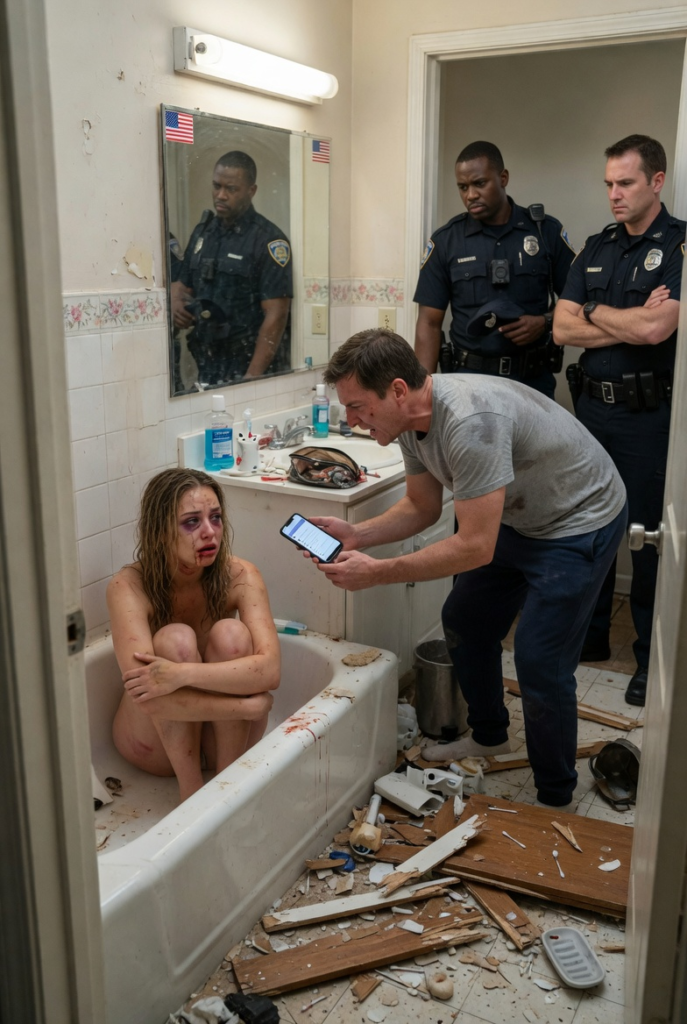
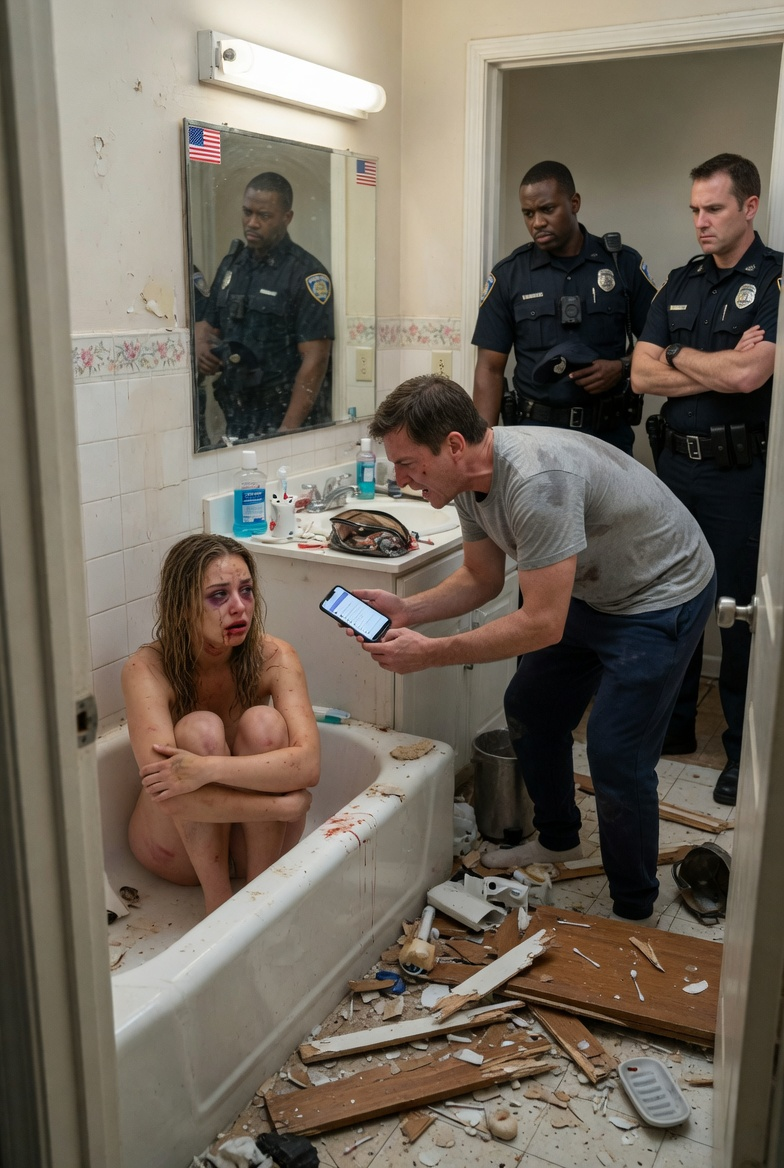
At 10:46 p.m., with one eye swelling and her left thumb shaking, Sarah opened the contact she thought belonged to her mother.
She typed the only truth she could manage.
Mom, please help.
Derrick broke my arm.
I’m scared. He won’t let me leave.
Then she hit send.
For several seconds, nothing happened.
The door handle jerked once.
Sarah pressed herself tighter between the tub and the cabinet.
The shower curtain brushed her cheek, cold plastic against hot skin.
A broken strip of doorframe still lay on the bath mat from the first time Derrick had kicked the lock two months earlier.
She had never thrown it away.
Some part of her had understood that evidence could become a kind of courage.
“Open the door,” Derrick said.
Her phone buzzed.
Relief went through her so sharply that she almost cried out.
Then she read the message.
Who is this? You have the wrong number.
The bathroom seemed to tilt.
Sarah stared at the screen until the words blurred.
One digit.
In the shaking, in the pain, in the panic, she had missed one digit in the number her mother had used for years.
Her confession had not gone to her mom.
It had gone to a stranger.
Before she could decide whether to throw the phone, hide it, or apologize for bleeding all over somebody else’s night, three dots appeared.
Then disappeared.
Then appeared again.
Where are you? Are you safe right now?
Derrick’s footsteps stopped.
“I’m counting to three,” he said through the door. “Then I’m coming in.”
Sarah swallowed hard and typed with her left thumb.
Locked in bathroom.
2247 Riverside Apartments, Unit 15.
Please don’t call police. He’ll kill me if cops show up. He has connections.
Derrick had said that so many times that it had started to sound like a fact.
He knew people.
He could make reports disappear.
He could make women look crazy.
He could turn a story around before breakfast.
Those were the things he told her when he wanted her scared enough to stay quiet.
The message came back at 10:48 p.m.
I’m sending someone. Do not open that door. Hold on.
Sarah stared at the words.
They were plain.
No dramatic promise.
No speech.
Just instructions.
“One,” Derrick shouted.
The lock plate shook.
Sarah held her arm closer and tried not to make a sound.
Her phone battery read 17 percent.
The towel by the sink had little red dots on it from her mouth.
A car passed outside with bass thumping through the parking lot, and the ordinary sound nearly broke her.
People were still driving.
People were still coming home from late shifts.
Somebody was probably carrying groceries up an outside stairwell or searching for a parking spot under the building lights.
The world had not ended.
It had only narrowed around her.
“Two.”
For half a second, Sarah wondered whether she had made everything worse.
Maybe the stranger would call the police and Derrick would hear sirens.
Maybe the stranger would do nothing.
Maybe Derrick was right, and help was just a word people used before they looked away.
Then the wood above the handle cracked.
“Three.”
The door slammed inward.
Derrick’s shoulder hit it so hard the mirror shook.
He filled the doorway in a black T-shirt, chest heaving, face flushed, eyes bright with fury.
A red scrape crossed one knuckle.
Sarah did not know whether it came from tile, drywall, or her.
He saw the phone first.
“Who did you text?” he demanded.
“Nobody,” she whispered.
He crossed the small bathroom in two steps and ripped it out of her hand.
His eyes moved across the screen.
The plea.
The address.
The unknown number.
Then Derrick changed.
It was not the usual change, the quick switch from soft to violent or sorry to cruel.
This was something Sarah had never seen on him.
Fear.
His face drained so fast he looked sick.
“How do you have this number?” he hissed.
“I don’t know,” Sarah said. “I meant to text my mom.”
A knock sounded from the front of the apartment.
Once.
Twice.
Then a third time, harder.
Derrick froze with Sarah’s phone in his hand.
The man outside spoke through the door in a low, calm voice.
“Derrick, I know you’re in there.”
Derrick did not answer right away.
Sarah sat on the bathroom floor, barely breathing.
The whole apartment felt suspended around that sentence.
Then Derrick called back, “You need to leave.”
“This is Michael,” the man said. “Open the door and step away from her phone.”
Sarah did not know the name.
Derrick did.
She saw it in the way his shoulders tightened from across the apartment.
She saw it in the way his voice changed, thin and sharp.
“This is private,” Derrick snapped.
“Nothing about a woman texting for help from a locked bathroom is private,” Michael said.
Sarah heard another voice outside, older and nervous.
“Derrick, it’s David from the apartment office,” the second man said. “I’ve got the emergency key.”
Keys rattled.
Derrick swore under his breath.
Sarah’s phone lit in his hand.
The message glowed on the lock screen.
I have the texts. I have the address. And I am not alone.
That was when Derrick looked back toward the bathroom.
Not at Sarah’s face.
At her fear.
He knew exactly what he had built there.
He had counted on it.
“Sarah,” he said, suddenly softer. “Listen to me. When they come in, you’re going to say you fell.”
The deadbolt began to turn.
Derrick’s mouth tightened.
“You hear me?” he said.
Sarah pressed her back to the cabinet and said nothing.
The door opened three inches before Derrick lunged for it.
A chain lock caught hard.
The sound cracked through the apartment.
Michael’s voice did not change.
“David, cut the chain if you have to.”
Derrick slammed his palm against the door.
“You come in here, I’ll have you arrested for trespassing.”
“No,” David said, and his voice shook but did not break. “You won’t.”
There was a pause.
Then metal scraped metal.
Sarah later learned David had grabbed a bolt cutter from the maintenance closet before he came upstairs.
At the time, all she heard was the chain snap and hit the floor.
The front door opened.
Michael stepped in first.
He was not enormous.
He was not some movie version of rescue.
He wore jeans, work boots, and an old dark hoodie, and he kept both hands open where Derrick could see them.
David stood behind him with a key ring in one hand and his phone in the other.
Both men looked past Derrick, down the hall, toward the broken bathroom door.
“Sarah?” Michael called. “Can you hear me?”
Something about hearing her name from someone who was not using it as a weapon made her throat close.
“Yes,” she managed.
Derrick moved as if to block the hallway.
Michael’s gaze sharpened.
“Don’t,” he said.
Just one word.
Derrick stopped.
There are moments when a person who has filled every room suddenly becomes the smallest thing in it.
Sarah watched that happen to him.
The man who had made her count his moods like weather was now counting exits.
He looked at Michael.
He looked at David.
He looked at the phone in his hand.
Then he threw Sarah’s phone onto the couch as if it had burned him.
Michael did not go toward Derrick first.
He went toward Sarah.
He walked slowly enough not to scare her, crouched at the bathroom doorway, and stopped before crossing the threshold.
“Can I come closer?” he asked.
Sarah nodded.
That question undid something in her.
For two years, Derrick had entered rooms as if permission was an insult.
Michael asking before stepping toward her made her cry harder than the pain had.
He saw her arm and his face changed, but he kept his voice steady.
“David, tell them she needs medical help now.”
David lifted the phone to his ear and spoke into it, words tumbling out.
Broken door.
Visible injury.
Victim conscious.
Unit 15.
Derrick laughed once, harsh and fake.
“She’s drunk,” he said. “She fell in the bathroom. This is ridiculous.”
Nobody answered him.
Michael looked at Sarah.
“Did he hurt you?” he asked.
Derrick stepped forward. “Don’t you answer that.”
Michael stood slowly.
The calm left his face, but not his control.
“Back up,” he said.
Derrick’s hands curled.
For one terrible second, Sarah thought he might swing at Michael.
Then David raised his phone a little higher.
“I’m recording,” he said.
That stopped Derrick more completely than any threat could have.
A man like Derrick was brave when the walls were his witnesses.
He was less brave when the room had a record.
The first siren did not wail into the parking lot the way Sarah had feared.
Help arrived in fragments.
Footsteps on the outdoor stairs.
A knock from a uniformed officer at the half-open door.
A paramedic kneeling beside Michael in the bathroom.
A second officer asking David to step into the hall.
Sarah kept expecting Derrick to say a name that would make everyone leave.
He did not.
He kept saying she fell.
He said it to Michael.
He said it to David.
He said it to the officer.
He said it with Sarah’s broken bathroom door hanging off the frame ten feet away.
At 11:13 p.m., a paramedic wrapped Sarah’s arm against her body and helped her stand.
Her legs shook so badly Michael had to move the bath mat out of the way so she would not slip.
When they led her through the apartment, Sarah saw the ordinary details waiting where violence had interrupted them.
A laundry basket half full of towels.
A paper coffee cup on the counter.
Her purse on the chair by the door.
A small American flag sticker on the apartment office notice taped near the entry, the kind David put up every summer and never took down.
She had walked past it a hundred times without seeing it.
That night, it looked like proof that the building belonged to other people too.
Not just Derrick.
At the hospital intake desk, Sarah gave her name with her left hand shaking in her lap.
A nurse cut the sleeve of her sweatshirt instead of pulling it over the injured arm.
Someone brought her a paper cup of water with a bendy straw.
Someone else asked whether she wanted her mother called.
Sarah said yes.
Then she cried because she had not said that word in so long without asking Derrick first inside her own head.
Her mother arrived just after midnight.
She came through the sliding glass doors in sweatpants, her hair twisted up badly, one sock showing above the other, like she had dressed while running.
When she saw Sarah, she stopped.
Her hand went to her mouth.
Not because she did not believe it.
Because she did.
“Baby,” she whispered.
Sarah tried to apologize.
The sound that came out was not a word.
Her mother crossed the room and put both arms around the parts of Sarah that did not hurt.
Michael stayed near the wall.
He had given the officers the screenshots, the time stamps, and the number Sarah had accidentally reached.
He did not try to make himself the center of the room.
When Sarah’s mother finally noticed him, she asked, “Who are you?”
Michael looked down at his boots.
“Wrong number,” he said.
That was the simplest answer.
It was not the whole one.
Later, when the nurse had cleaned Sarah’s lip and the doctor had confirmed the fracture, Michael told her why Derrick had recognized the number.
Years earlier, Michael had worked the same warehouse shift as Derrick.
Derrick had been charming there too, until he was not.
Michael had seen enough of the temper, enough of the cornering, enough of the way Derrick could make a story sound reasonable if he got to tell it first.
There had been an HR file.
There had been a break room argument.
There had been a woman from the shipping desk who transferred departments after Derrick waited by her car twice.
Michael had reported what he saw.
Derrick never forgave him for it.
“Your mom’s number must be one digit off from mine,” Michael said.
Sarah looked at him from the hospital bed.
“You believed me,” she said.
Michael’s jaw worked once.
“My sister had a man nobody believed soon enough,” he said.
That was all he said about it.
It was enough.
By 2:07 a.m., an officer asked Sarah whether she wanted to give a statement.
Her mother squeezed her left hand.
Sarah looked at the hospital wristband around her arm, at the intake form on the rolling tray, at the little plastic bag that held the sweatshirt sleeve they had cut away.
For two years, Derrick had taught her to answer questions in ways that protected him.
That night, she answered in ways that protected herself.
She told them about the shove.
She told them about the bathroom door.
She told them about the old broken strip of wood she had kept on the bath mat.
She told them about the debit card PIN, the spare key, the apology voice, the way he made her feel crazy every time she named what happened.
The officer wrote it down.
Not perfectly.
Not magically.
But in ink.
The police report did not heal her arm.
The hospital form did not erase the nights she had spent listening to Derrick breathe on the other side of a door.
But paper can matter when someone has spent years trying to turn your truth into air.
Two days later, Sarah went back to Riverside Apartments with her mother, David from the office, and two officers standing by.
She did not go alone.
That felt strange.
Almost embarrassing.
Derrick had trained embarrassment into her until even being helped felt like being exposed.
Her mother brought cardboard boxes.
David brought a new lock.
Michael waited outside near his pickup, leaning against the tailgate with a paper coffee cup in both hands.
He did not come in until Sarah asked him to carry the heavier box.
Inside the apartment, everything looked smaller.
The hallway where Derrick had seemed so huge was just a hallway.
The bathroom door was cracked wood and cheap hardware.
The bedroom was laundry, dust, a tilted lamp, and a dent in the drywall she had learned not to look at.
Fear had made the place enormous.
Truth shrank it.
Sarah packed her work shoes.
She packed the chipped blue mug.
She packed the old lease folder, the hospital discharge papers, and the printed screenshots Michael had sent her mother that morning.
She left Derrick’s things where they were.
Not because she was generous.
Because they were not hers to carry anymore.
The next week moved in pieces.
A county office hallway with gray chairs.
A clerk sliding forms under a glass window.
Her mother writing dates on a yellow legal pad because Sarah’s right hand still could not hold a pen properly.
A judge she barely saw from across a room.
A protective order with her name and Derrick’s name printed on the same page, as if the paper understood what she had been trying to separate.
Derrick tried to call from numbers she did not recognize.
Sarah did not answer.
Once, he left a voicemail from a friend’s phone.
He cried.
He said he loved her.
He said Michael had always hated him.
He said she was ruining his life.
Sarah sat at her mother’s kitchen table with the phone on speaker while her mother stood by the sink, not touching anything.
When the voicemail ended, Sarah deleted it.
Then she saved the number in the folder.
Evidence had started as scraps on a bathroom floor.
Now it had a place.
Healing was not cinematic.
It was not Sarah standing in sunlight with a perfect smile and a new life waiting like a prize.
It was physical therapy that made her sweat through her shirt.
It was sleeping with a lamp on.
It was flinching when a neighbor knocked too hard.
It was buying a new phone case because Derrick had cracked the old one, then crying in the checkout line because the cashier asked whether she needed a bag.
It was her mother making scrambled eggs at 9 p.m. because Sarah had forgotten dinner.
It was David waving from the apartment office when Sarah came back once to sign the lease release.
It was Michael texting only once a week at first.
You good?
Not a speech.
Not pressure.
Just a door left open without a hand on the knob.
Three months later, Sarah sat on her mother’s front porch with her arm still stiff but healing.
The evening air smelled like cut grass and somebody’s dryer vent.
A small flag moved softly from the porch rail across the street.
Her mother brought out two mugs of coffee even though it was too late for coffee.
Sarah took hers with both hands.
The right one still ached in the rain.
Some aches stayed long enough to become weather.
Her mother sat beside her and said, “I keep thinking about that number.”
Sarah did too.
One wrong digit.
One mistake.
One stranger.
One man Derrick had spent years hating because he had once refused to look away.
“It should have been you,” Sarah said.
Her mother’s face crumpled.
“I know.”
Sarah leaned her shoulder against her.
“I’m glad it reached him.”
They sat there quietly.
No grand lesson arrived.
No perfect ending tied the night into something pretty.
What happened to Sarah was still what happened to Sarah.
But Derrick had been wrong about the world.
Every room was not just a bigger cage.
Some doors opened.
Some people believed the first time.
Some records stayed.
Some keys were used to let someone out.
Sarah thought again about the ugly truth she had learned too late and the better truth that had met it at the door.
Men like Derrick do not always break into your life.
Sometimes you hand them a key because they are smiling when they ask.
But one night, Sarah sent the truth to the wrong number, and a stranger brought enough people with him to make sure Derrick was not the only one holding a key anymore.