Again.
That word changed the room.
At 3:09 p.m., Raúl called emergency services. While they waited, he began seeing the kitchen not as a mess, but as evidence. Bottles in the sink. Baby clothes piled beside the washer. A stool placed beside the stove.
On the refrigerator, under a sunflower magnet, Verónica’s handwritten list read like a schedule for a child forced into an adult’s body: dishes, bottles, floor, Mateo. No cartoons until finished.
The paramedics arrived quickly. One examined Valeria’s back, then checked her ribs, shoulders, and wrists. His face tightened with the effort of staying professional.
“The injuries don’t look like they happened today,” he told Raúl quietly. “This girl has been carrying a heavy load for days.”
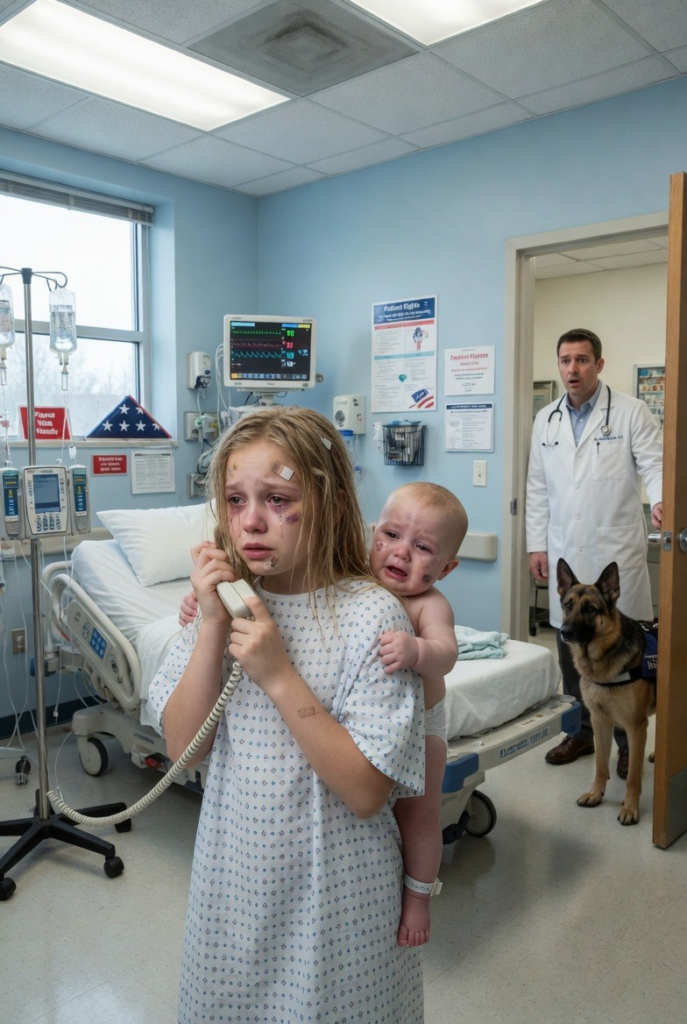
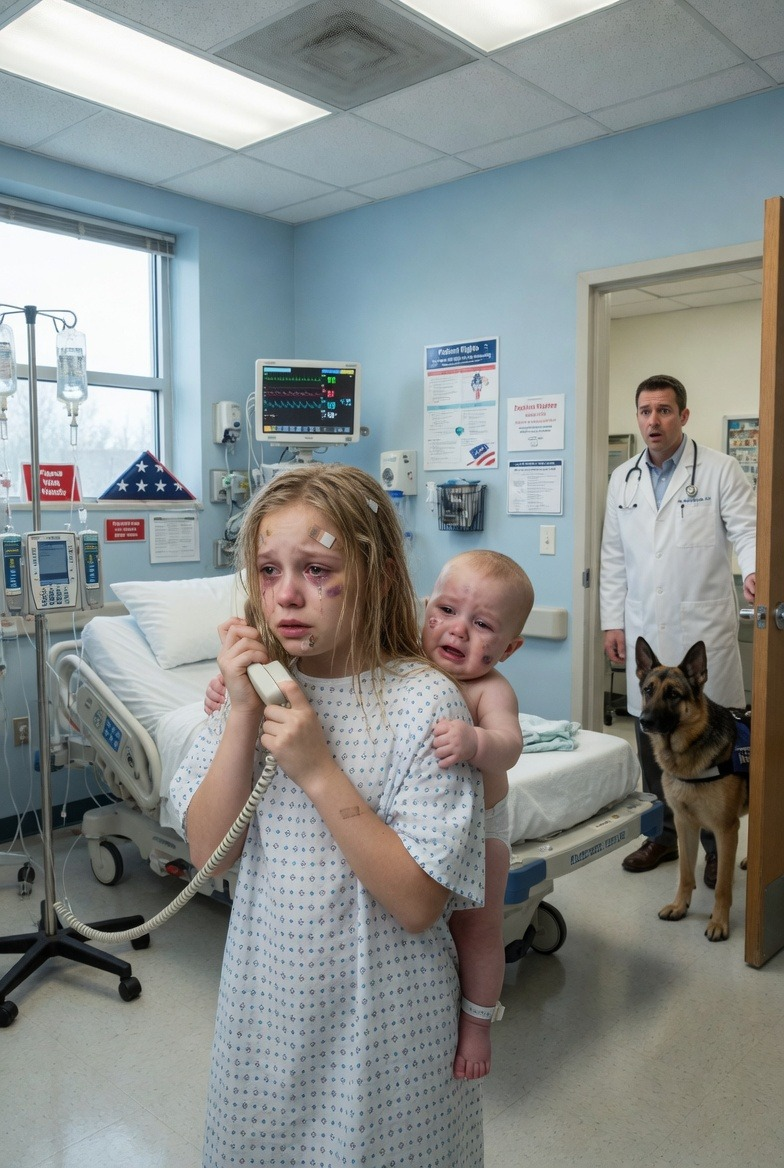
At San Gabriel Children’s Clinic, the hospital intake form recorded bruising across the upper back, dehydration, muscle strain, and exhaustion. A nurse asked whether Valeria felt safe at home.
Valeria looked at her father before answering. “Dad… don’t tell her I called you…”
That was when Raúl understood the worst part. His daughter was not only afraid of pain. She was afraid of being returned to the person who caused it.
The next morning, Raúl went back to 1294 Oak Haven with Mateo in his arms, Max at his side, and a calm so cold it frightened him.
For one ugly second, he imagined Verónica in that kitchen and imagined what rage would do if he let it take control. He locked his jaw instead. He had been trained better than that.
At 8:13 a.m., he photographed the kitchen. At 8:19, the chore list. At 8:27, he opened the home security app Verónica had once asked him to install because, she said, it made the house feel safer.
The system stored eight days of motion clips.
Raúl downloaded everything. He labeled the folder VALERIA_HOME_FOOTAGE. He copied it to a flash drive and opened the first kitchen recording from the day before.
Verónica appeared on screen in a white blouse, handbag on her shoulder, every inch of her neat. Valeria stood by the stove holding Mateo, her arms shaking from the weight.
Then Verónica reached toward the wall monitor and lowered the volume.
The picture kept playing almost silently. Verónica pointed to the floor, then to the sink, then to Mateo. Valeria nodded with the frightened obedience of a child who had learned that disagreement cost too much.
The next clip showed Valeria trying to lift a bottle warmer. Another showed her dragging the mop bucket. Another showed Mateo crying while Valeria rocked him and wiped the counter with one hand.
By the third clip, Raúl stopped sitting. He stood in front of the laptop with both hands braced on the table, breathing through his nose until the urge to throw the screen passed.
Then he noticed the cookie jar.
On the footage, Verónica glanced toward it more than once. Not toward the official camera near the hallway. Toward the cookie jar on the counter, beside the wall outlet.
Raúl walked into the kitchen and pulled it forward. Behind it was a second tiny black lens, blinking. A private camera. Not his. Not part of the system.
Beneath it sat a folded daycare notice with Mateo’s name on it. In Verónica’s handwriting, one line had been added: Don’t let Valeria talk to anyone.
Mrs. Salinas, the neighbor, had come in after seeing his truck. When she saw the camera, she went pale.
“Raúl,” she whispered, “that’s not yours.”
No. It wasn’t.
Then the front door opened.
Verónica stepped inside with sunglasses in her hair, coffee in her hand, and a smile ready for the world. It lasted until she saw the flash drive in Raúl’s palm and the hidden camera on the table.
She tried to explain. First she said Valeria had exaggerated. Then she said Mateo had been fussy. Then she said Raúl did not understand how hard it was to manage a house alone.
Raúl did not raise his voice. He placed the hospital intake form beside the chore list. Then he placed the flash drive beside both.
“Explain the bruises,” he said.
Verónica looked at Mrs. Salinas. Then at Max. Then at the camera.
She had no good answer.
The police arrived before noon. Raúl had called them after copying the footage and speaking with the attending physician at San Gabriel Children’s Clinic. He handed over the flash drive, the photographs, the chore list, and the hidden camera.
The investigation moved faster because the evidence was organized. Dates. Times. Camera angles. Medical notes. Witness names. Not grief. Not suspicion. Proof.
Verónica was questioned that afternoon. At first, she insisted she had only asked Valeria to “help.” Then investigators reviewed the footage showing repeated days of Mateo being left in Valeria’s care for hours.
One clip showed Valeria standing on the stool near the stove. Another showed her carrying a full laundry basket. Another showed Verónica taking food from the table while Valeria sat beside Mateo without a plate.
The cruel routine had not been hidden by chaos. It had been hidden by presentation. Clean curtains. Good photos. A respectable gate. A perfect family from the outside.
Valeria stayed at the clinic for observation, then with Raúl at his sister’s house while the legal process began. Mateo remained with Raúl under temporary protective arrangements.
In the weeks that followed, Valeria said very little. She slept with the hallway light on. She flinched when dishes clattered. She apologized before asking for water.
Raúl learned that healing a child is not done with one rescue. It is done afterward, in the small moments where they test whether safety is real.
So he made safety repetitive. Breakfast without chores first. Cartoons without permission. School pickup every day. Max sleeping outside her door. A therapist who never rushed her.
Months later, Valeria finally told him more. Verónica had started slowly, she said. First asking her to hold Mateo “for a minute.” Then making her wash bottles. Then leaving lists. Then threats.
The bruises came when Valeria dropped things, moved too slowly, or cried loudly enough that Mateo cried harder. The worst punishment was food being withheld until the house looked “good enough.”
Raúl listened without interrupting. His hands stayed open on his knees. He wanted to rage. Instead, he let his daughter finish every sentence at her own pace.
The case did not become simple, because cases involving families rarely do. There were statements, evaluations, hearings, and arguments over intent. But the footage did what emotion alone could not.
It made the pattern visible.
Verónica’s public mask cracked under the weight of timestamps. The hidden camera proved she had monitored the kitchen. The hospital report proved the injuries were not imagined. The chore list proved structure.
Eventually, the court restricted Verónica’s contact and ordered protective measures for both children. Raúl pursued full custody and continued cooperating with investigators, not because punishment erased anything, but because documentation protected what forgiveness could not.
Valeria did not become fine overnight. No child does. But she began to laugh again in small, cautious bursts. She learned to hand Mateo to an adult when her arms were tired. She learned that “I can’t” was not a crime.
One afternoon, months after the call, she spilled a cup of milk at breakfast. Her body went rigid. She looked at Raúl as if waiting for the old rule to return.
Raúl got a towel, set it on the table, and said, “It’s just milk, Vale.”
She stared at him. Then she cried so hard he had to sit beside her on the floor until it passed.
That was when he understood the house at 1294 Oak Haven had taught her to fear ordinary mistakes. Now his job was to teach her ordinary mercy.
“Dad… I can’t carry the baby anymore” had been the sentence that saved her. Not because it was loud, but because it finally reached the one person who heard what it really meant.
It meant: I am eight. I am tired. Please come home