There is a kind of love that looks like care because it uses the same hands.
A hand can smooth your blanket and still be the hand that loosened the screw.
The morning it happened, nothing seemed strange at first.
My stepmom stood in the kitchen with a paper coffee cup beside her, already dressed for work, while I shoved my binder into my backpack.
The house smelled like toast and the vanilla creamer she used every morning.
She asked for my pump.
“Just checking the settings,” she said.
That was not unusual.
She did it often enough that I barely looked up.
The screen beeped in her hand.
She frowned a little.
Then she smiled and handed it back.
“All good,” she said.
I remember that smile.
I remember the way she kissed my forehead before I left.
The kiss was so normal that I carried it into school with me like proof nothing bad was waiting.
By third period, my mouth was dry.
Not regular dry.
Wrong dry.
Painful, scraped-out, cotton-stuffed dry.
The whiteboard looked too bright, and the notes my teacher was writing started to blur at the edges.
I blinked hard, but the letters kept sliding away from each other.
My hands felt heavy.
My heart pounded fast, but my thoughts moved slowly, like they were coming through deep water.
I checked my blood sugar under the desk at 10:41 a.m.
The number was bad.
Then it climbed again.
For a few seconds, I just stared at it.
I thought maybe I had read it wrong.
I thought maybe the meter was being weird.
I thought a lot of stupid hopeful things because the truth was too frightening to reach for in the middle of English class.
My teacher saw my face and stopped talking.
“Do you need the nurse?” she asked.
I nodded because speaking suddenly felt hard.
She did not argue.
She wrote me a pass and watched me stand up.
The hallway between my classroom and the nurse’s office was not long, but that morning it felt endless.
Lockers blurred beside me.
The floor seemed to tilt.
I kept one hand on the strap of my backpack and one hand near the wall, not exactly touching it, but close enough that I could catch myself if my legs gave out.
A freshman laughed somewhere near the water fountain.
Somebody’s sneakers squeaked on the tile.
The ordinary sounds of school kept going, which made the panic feel worse.
When your body is failing, it feels insulting that the rest of the world can still be normal.
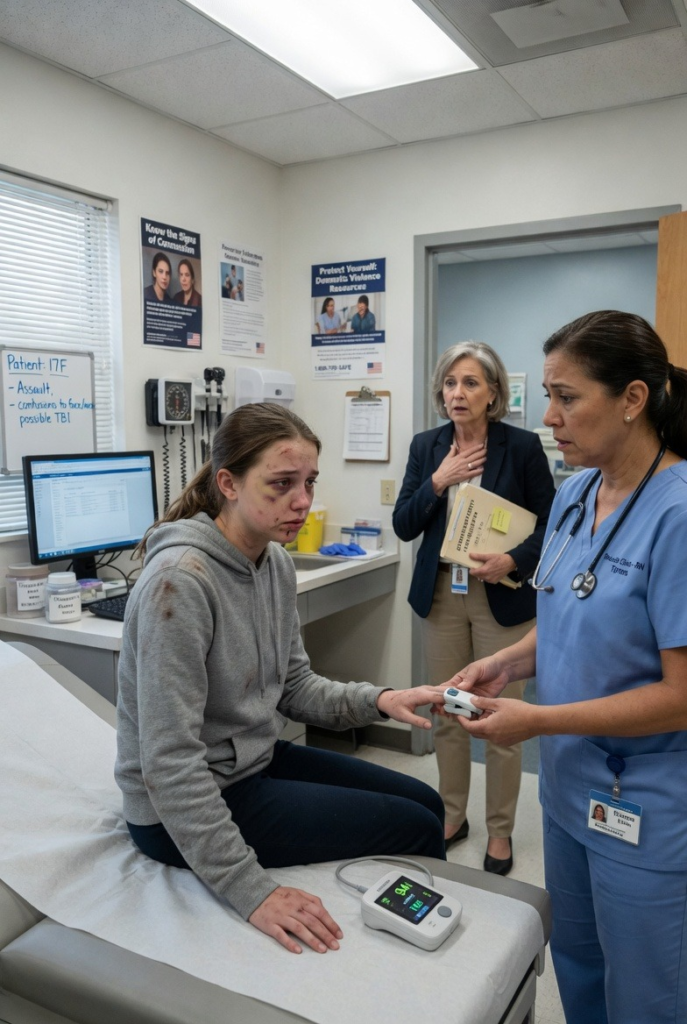
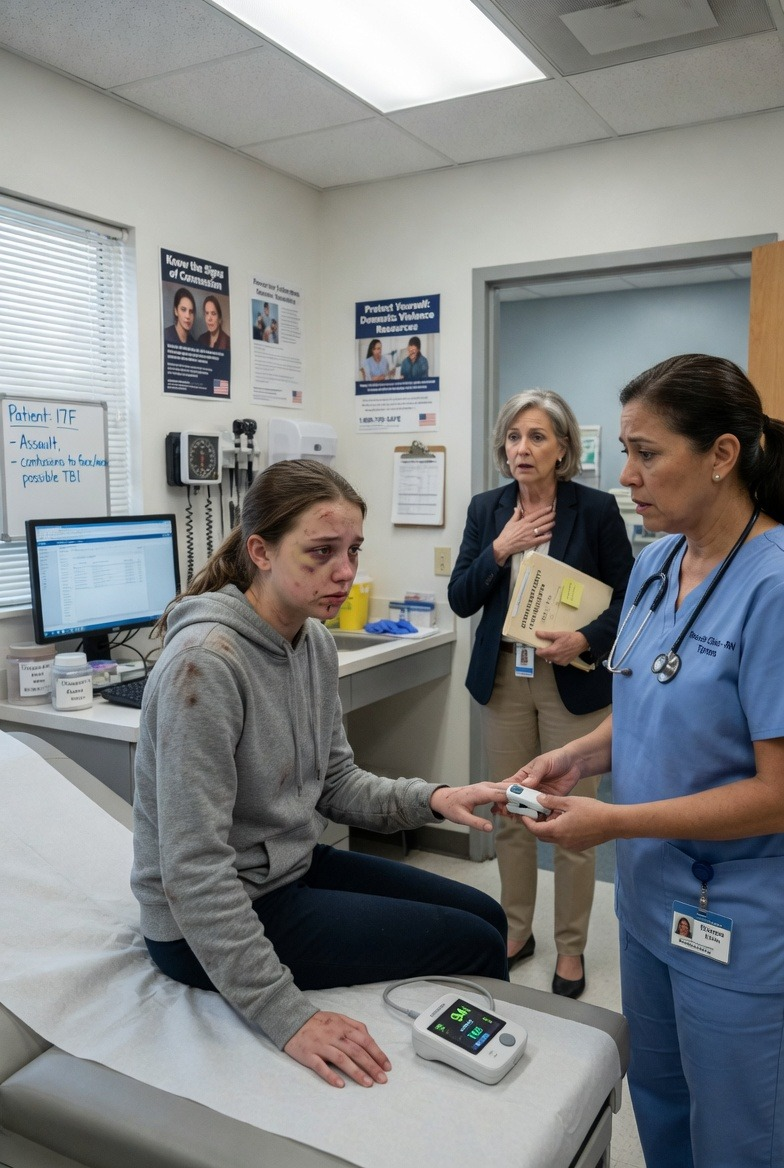
Nurse Strand looked up the second I came in.
She only needed one look.
Her expression changed.
Not into panic.
Into focus.
“Sit,” she said.
By the time I dropped onto the cot, she was already beside me.
The paper under me cracked sharply.
I tried to explain that my blood sugar was climbing and I needed to bolus, but the sentence came out scrambled.
My fingers fumbled with the backpack zipper.
I could not get it open fast enough.
Nurse Strand crouched beside me.
“I’m going to reach in, okay?”
I nodded.
She found my meter first, then my pump, and turned the screen toward herself.
That was the moment everything changed.
She froze.
It was not dramatic.
She did not gasp.
She did not drop anything.
Her thumb just stopped over the buttons, and her eyes narrowed in a way that made the air in the room feel thinner.
“When was your basal rate last changed?” she asked.
The question took a second to land.
Basal rate was my background insulin, the slow steady amount my pump delivered all day and night.
I knew what it was.
I also knew I was not supposed to mess with it.
“My stepmom did it this morning,” I said.
Nurse Strand looked up.
“This morning?”
“Yeah. She usually does.”
Something in her face went hard.
That was the first moment I felt afraid of something outside my body.
Until then, I had only been scared of the number on the screen.
Now I was scared of the way an adult was looking at it.
She asked who had access to my pump settings.
I said mostly my stepmom.
She asked whether my endocrinologist had recently changed my plan.
I said I did not think so.
She asked if I felt like this often.
That question should have been easy.
It was not.
My mind filled all at once with mornings when I could not see straight before lunch.
Afternoons when I shook so hard I had to sit on the bathroom floor.
Nights when my stepmom told my dad I was “all over the place again” and held my hand like she was the only reason I survived.
ER visits.
Juice boxes.
Finger sticks.
Her voice saying, “You scared me so bad tonight.”
I heard myself say, “More lately.”
Nurse Strand reached for the office phone.
“I’m going to call your endocrinologist,” she said.
“Why?”
She did not answer right away.
She spoke low into the receiver, but I could hear enough.
She gave my name.
She gave my date of birth.
She gave the time, 10:48 a.m.
She read off the number from my meter and then navigated through my pump settings with one finger, writing quickly on a yellow legal pad.
Her handwriting was sharp and slanted.
Basal rate.
Correction factor.
Safety limits.
Daytime delivery.
She repeated one setting twice, like she wanted to make sure she had not misunderstood it.
Then she said, “That does not match the written plan we have on file.”
I felt cold.
She pulled open the file drawer and took out my student medical folder.
Inside was the plan my endocrinologist had sent at the beginning of the year.
Behind it was a signed authorization form from my stepmom saying the school should follow the doctor’s instructions exactly.
Nurse Strand laid that paper beside my pump.
The numbers did not match.
I looked from one to the other and tried to make my brain do the math.
It would not.
My body was too busy being sick.
My fear was too busy growing teeth.
Nurse Strand asked the person on the phone to confirm the last authorized change.
Then she went quiet.
Very quiet.
The fan clicked.
The cot paper crackled under my hand.
The hallway outside filled with the muffled sound of lockers closing between periods.
Finally, she said, “I understand. I’m documenting it now.”
She opened a blank school incident report.
That was when I knew this was not about a bad number anymore.
It was paperwork.
It was an official file.
It was my life turning into something adults could prove.
Nurse Strand wrote down the pump menu path.
She wrote down the reading.
She wrote down my exact words: “My stepmom did it this morning.”
Then she said something into the phone that made my stomach drop.
“Possible medical abuse.”
The words did not feel real.
They were too clean for what they meant.
She listened again.
Then she said another phrase.
“Possible Munchausen by proxy.”
I had never heard it before.
I did not know the full definition.
But I understood enough from her face.
Someone making a child sick so they could be seen caring for them.
Someone turning danger into attention.
Someone using medicine like a weapon and worry like a disguise.
My stepmother’s forehead kiss came back to me so clearly I almost gagged.
Nurse Strand ended the call and looked at me.
She was careful now.
I could see it.
Every word was chosen before it left her mouth.
“I need to make a report,” she said.
“To who?”
“CPS.”
The room seemed to move backward from me.
I knew what CPS was in the vague way kids know about things adults whisper about.
I knew it meant something serious.
I knew it meant someone thought a home might not be safe.
I did not know what it felt like to have that home be mine until the phone was in her hand.
She called the report in from her desk.
She kept her voice steady.
She gave times, settings, symptoms, and the discrepancy between the doctor’s plan and the pump.
She did not say my stepmother was guilty.
She said the settings were dangerous.
She said the changes were not authorized.
She said I was symptomatic at school.
She said my caregiver had reported frequent instability at home.
The words sounded almost harmless one at a time.
Together, they made a shape I could not look away from.
Then my phone buzzed.
It was on the cot beside my thigh.
The screen lit up.
A message from my stepmom filled the lock screen.
“Don’t let the nurse touch your pump. I’m on my way.”
Nurse Strand saw it before I could hide it.
For one second, the room went still.
Not quiet.
Still.
Even the fan seemed to pause between clicks.
Nurse Strand did not grab my phone.
She did not raise her voice.
She leaned over, copied the timestamp into the incident report, and slid the phone just far enough away that I could see it but not answer it by accident.
“Do not respond yet,” she said.
Another message came three minutes later.
“Who is in there with you?”
Then another.
“Is the pump still connected?”
Then another.
“Answer me.”
None of them asked if I was okay.
That was the part that finally cracked something open inside me.
My stepmother was always worried when other people were watching.
She was always gentle when my dad was in the room.
She was always scared after the crash.
But here, when she thought it was just me and the nurse, she did not ask what my blood sugar was.
She asked who had the pump.
Nurse Strand called my teacher to the office.
My teacher arrived with my backpack strap twisted around her hand and stopped in the doorway.
She looked at the open file, the legal pad, the pump, and my phone.
Her face changed the same way Nurse Strand’s had.
“Oh my God,” she whispered.
Nurse Strand said, “I need you to stay as a witness.”
That sentence made everything feel even more real.
A witness.
Not a helper.
Not a hall pass.
A witness.
The office phone rang.
Nurse Strand checked the caller ID and went still again.
“It’s your stepmother,” she said.
My teacher moved closer to the door.
Nurse Strand picked up the receiver and turned on speaker.
My stepmother’s voice came through sweet and breathless.
“Hi, Kimberly. I’m almost there. Don’t let her tell you anything until I—”
Nurse Strand cut in.
“She is receiving medical care. We are following the physician’s written plan.”
There was a tiny pause.
It was the first time I had ever heard my stepmother not know what voice to use.
Then she laughed softly.
“Oh, I think there’s been a misunderstanding. She gets confused when her sugar is high. I manage all of this for her.”
The words should have comforted me.
They used to.
That day, they sounded like a door locking.
Nurse Strand looked at me, and something in her expression softened without losing focus.
“The endocrinologist has confirmed the school plan,” she said. “And I have already made the report.”
Silence.
Then my stepmother said, lower, “You did what?”
My teacher’s hand flew to her mouth.
Nurse Strand stayed calm.
“You can speak with the proper authorities when you arrive.”
The line went dead.
My blood sugar was still high.
My hands were shaking.
But for the first time all morning, I felt like someone had stepped between me and the thing I had not known was hurting me.
Within twenty minutes, the front office called down.
My stepmother was there.
Nurse Strand told them not to send her back.
She kept me in the nurse’s office with the door open, my teacher sitting beside me, and the school secretary visible through the glass.
I could hear raised voices faintly from the front office.
My stepmother did not sound sweet anymore.
She sounded cornered.
Then my dad arrived.
That was the part I had been dreading most.
I wanted him to burst in and immediately know.
I wanted him to look at my stepmother and see what Nurse Strand had seen.
But people do not always recognize danger when it is wearing the face they eat dinner beside every night.
He came into the office looking terrified and angry, but not at the right person yet.
“What is going on?” he asked.
Nurse Strand explained slowly.
She showed him the doctor’s plan.
She showed him the pump settings.
She showed him the messages.
My dad kept shaking his head at first.
Not because he did not believe me.
Because believing it would split his life in half.
My stepmother stood behind him, crying now.
Not big ugly crying.
Careful crying.
The kind that checks the room for witnesses.
“I was trying to help,” she said.
Nurse Strand did not argue.
She just handed my father the printed pump settings sheet.
“These changes were not authorized by the doctor,” she said.
My father stared at the paper.
His hands began to tremble.
I watched him read the numbers once, then again, like a different answer might appear if he looked harder.
Then he looked at me.
I do not remember exactly what his face did.
I only remember that he suddenly looked older.
“Did you know?” he asked my stepmother.
She started talking fast.
Too fast.
About stress.
About mistakes.
About how hard it was caring for a diabetic child.
About how he was never home enough to understand.
Every sentence tried to turn the room away from the pump.
Nurse Strand kept turning it back.
The pump.
The settings.
The written plan.
The messages.
The report.
Care without proof can be theater.
Proof is what stays when the performance ends.
CPS arrived before the final bell.
There was no dramatic arrest in the hallway.
No shouting crowd.
No movie scene.
Just two adults with badges on lanyards, a closed conference room, and a school file that suddenly mattered more than anyone’s version of the story.
They asked me questions in a gentle voice.
Who changed the pump?
How often?
Did I ever feel sick after settings were changed?
Did my stepmother ever tell me not to talk to doctors alone?
I answered as best I could.
The answers felt small when I said them.
But Nurse Strand had written down enough for the pattern to stand up.
That afternoon, I did not go home with my stepmother.
My dad drove me straight to my endocrinologist’s office.
He did not play music in the car.
He kept both hands on the wheel, his knuckles pale, and every few minutes he looked at me in the rearview mirror like he was checking whether I was still there.
At the office, they downloaded my pump history.
That was the part that ended the argument.
The device remembered.
It remembered dates.
It remembered times.
It remembered changes made late at night and early in the morning.
It remembered what people tried to call accidents.
The endocrinologist did not use emotional language.
Doctors rarely do when the facts are already loud enough.
She said the pattern was dangerous.
She said it could have caused a medical crisis.
She said we were lucky the school nurse caught it.
My father sat beside me and cried with one hand over his mouth.
I had never seen him cry like that.
Not loud.
Not dramatic.
Broken in a quiet way that made me want to comfort him, even though I was the one on the exam table.
That instinct scared me.
Because that was what I had been trained to do at home.
Make adults feel better about what their choices had done to me.
The next weeks were not clean.
Nothing about it was simple.
There were interviews.
There were temporary safety plans.
There were medical reviews and school meetings and a new rule that no one changed my pump settings without written confirmation from my doctor.
My dad moved my supplies into a locked drawer only he and I could access.
For the first time, I learned the pump menu myself.
Not because I wanted to carry more responsibility.
Because I wanted my body back.
My stepmother kept insisting it had been a misunderstanding.
She said she loved me.
She said stress made her careless.
She said Nurse Strand had overreacted.
But the messages stayed.
The pump history stayed.
The doctor’s plan stayed.
The incident report stayed.
It is strange what saves you.
Not a speech.
Not a heroic rescue.
A school nurse who noticed a pause in the wrong place.
A yellow legal pad.
A printed authorization form.
A device that kept records better than a scared kid could.
For a long time afterward, I could not think about my stepmother kissing my forehead without feeling sick.
That was the hardest part to explain.
People understand bruises better than betrayal dressed as tenderness.
They understand a shout better than a hand rubbing your back while the other hand changes a setting.
I still go to the nurse’s office sometimes.
It still smells like alcohol pads and old mint gum.
The cot paper still crackles.
The United States map is still crooked on the wall.
But I do not think of that room as boring anymore.
I think of it as the place where someone looked at the evidence instead of the performance.
The place where a woman in scrubs set my insulin pump on a desk like proof.
The place where my body finally stopped being treated like a mystery and started being treated like a warning.
I walked in expecting a juice box, a lecture about breakfast, and maybe a call home.
I walked out knowing the person who kissed my forehead every night had been nudging my body toward a coma on purpose.
And the first adult who truly protected me was the one who noticed three seconds of silence and refused to look away.