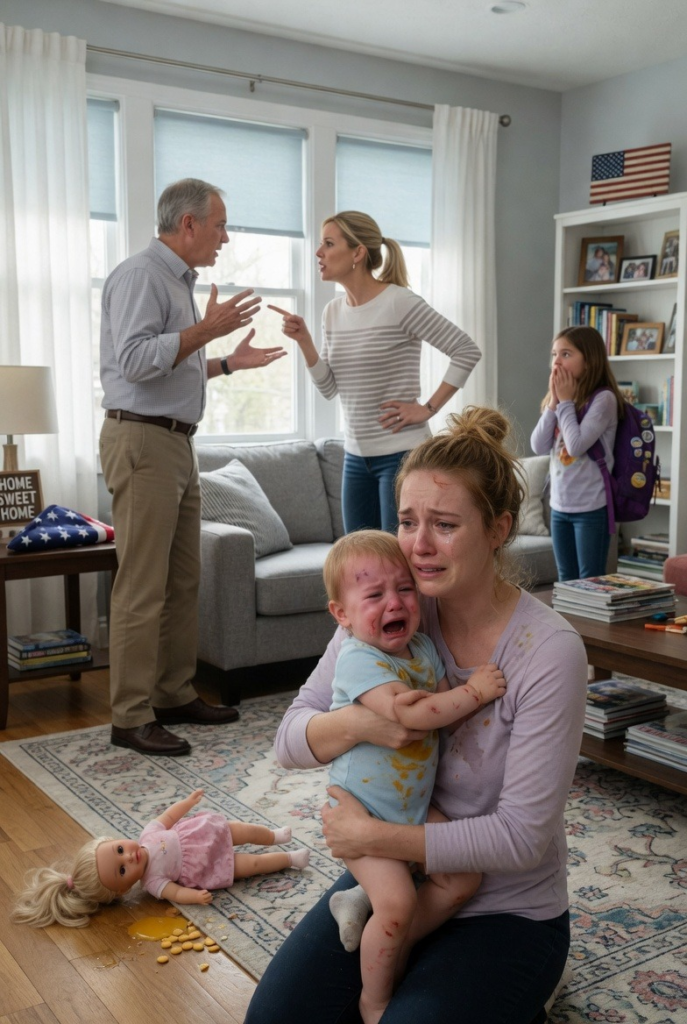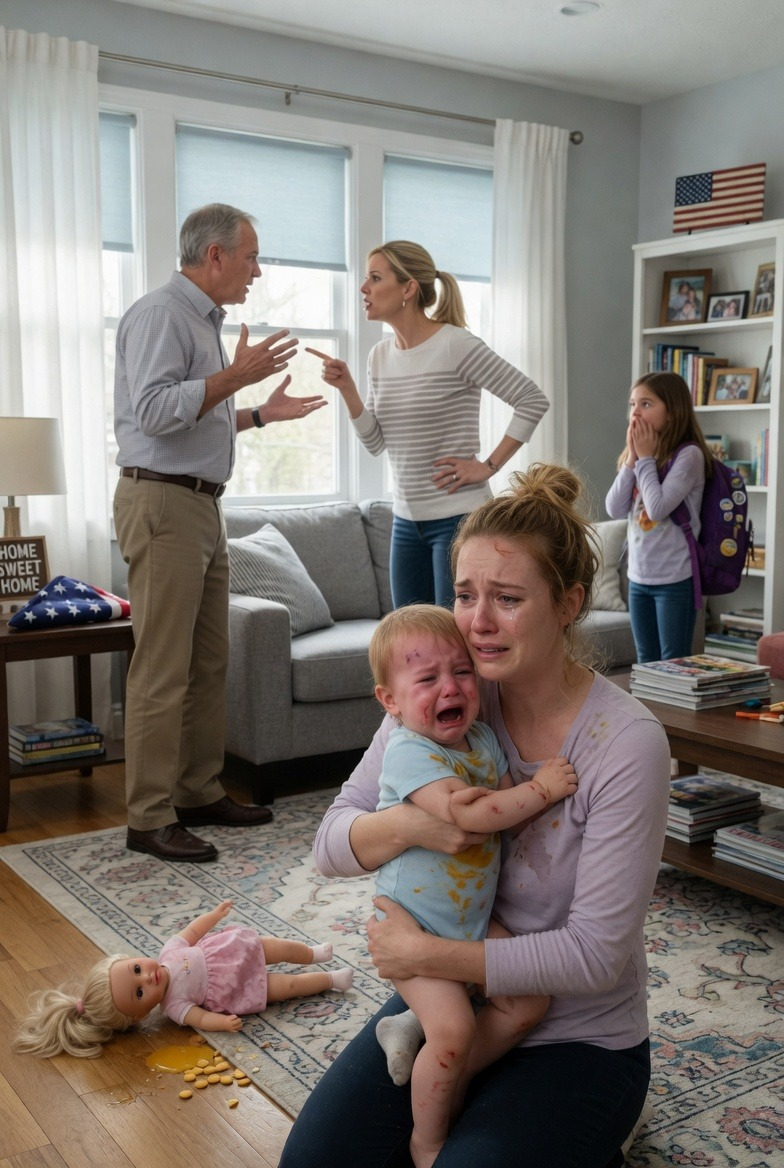
Nicole understood then that this was not only about Gina. This was older than one afternoon. It had rules, witnesses, and people trained to look at the floor.
She backed toward the front door with Gina in her arms and the phone still recording. Richard took one step after her. Nicole told him not to touch them.
Outside, sunlight hit the driveway so hard Nicole had to blink. She buckled Gina into the back seat of her SUV with shaking hands and drove straight to the hospital.
At the hospital intake desk, Nicole said the words clearly. Her father had struck her child. Her daughter’s jaw looked injured. The nurse’s face changed immediately, and the room moved around them with purpose.
The medical chart documented swelling, bleeding, and suspected fracture. A hospital social worker came in. A police officer took Nicole’s statement. The recording on her phone became the first piece of proof.
By 5:42 p.m., the hospital had completed the initial injury report. Gina was given pain medicine, examined carefully, and prepared for the treatment she needed. Nicole sat beside her bed and held her hand.
Gina woke once and whispered, “Was I bad?” Nicole bent over her and said no so firmly that the nurse in the corner looked down at her clipboard.
That question stayed with Nicole longer than anything Richard had said. The room had taught Gina that her pain was the problem, and Nicole promised herself she would spend the rest of her life undoing that lesson.
The next morning, the investigation moved from one terrible event into something bigger. The officer asked about Tina’s comment. A child protective services worker interviewed Tina separately with Jessica present at first, then without her.
The old secret came out slowly. Richard had hurt children before. Not always in ways that sent anyone to a hospital, but enough that everyone knew. Jessica had learned to call it discipline because calling it abuse would have meant naming her own childhood.
There had been a wrist injury when Jessica was thirteen. A school office note that said “fall at home.” A neighbor’s concern years later. A family story polished until it no longer sounded like violence.
Nicole’s mother had protected Richard every time. She managed explanations, coached apologies, and taught everyone that keeping the family together mattered more than telling the truth.
When Nicole heard that, she did not feel satisfaction. She felt grief with edges. Her sister had been both victim and defender, but Gina would not become another child sacrificed to that confusion.
Nicole filed for a protective order through county family court. The police report included her phone recording, the hospital injury report, and the statements from the living room. Process turned pain into evidence.
Jessica called three days later. At first she was angry. Then she cried. Then she admitted she had known Richard was dangerous when embarrassed, but she had never believed he would do that to Gina.
Nicole told her belief was no longer the point. Safety was. Tina also needed help, but Gina would never again be placed in a room where adults debated whether she deserved pain.
Richard was arrested and later pled guilty to a child abuse charge. The court ordered no contact with Gina. Nicole’s mother was not charged the same way, but her access to Gina ended completely.
The family split after that. Some relatives said Nicole had destroyed everything by making it official. Others quietly admitted they had been afraid of Richard for years and wished someone had acted sooner.
Gina’s recovery took time. There were appointments, soft foods, sleepless nights, and moments when she covered her face if someone raised a hand too quickly near her.
Nicole kept every document in one folder: hospital intake papers, police report number, court order, therapy referrals, and a copy of the school office sign-out sheet from that morning. It was not revenge. It was memory with proof.
Months later, Gina sat at the kitchen table coloring a picture of their house. She drew the mailbox, the porch, and herself beside Nicole. She gave both of them very large smiles.
Nicole looked at that drawing and thought again of the living room, the paper coffee cups, the blank TV, and the adults who had called violence a lesson.
Cruel families do not always look cruel from the outside. Sometimes they have clean kitchens, framed school pictures, and a porch flag waving in the sun.
The difference was that Gina would grow up knowing the truth. She had not been bad. She had been hurt, and her mother had believed her before anyone else did.
That was what changed everything. Not the arrest alone. Not the court order alone. The change began when Nicole stopped asking cruel people to become kind and started protecting her child without their permission