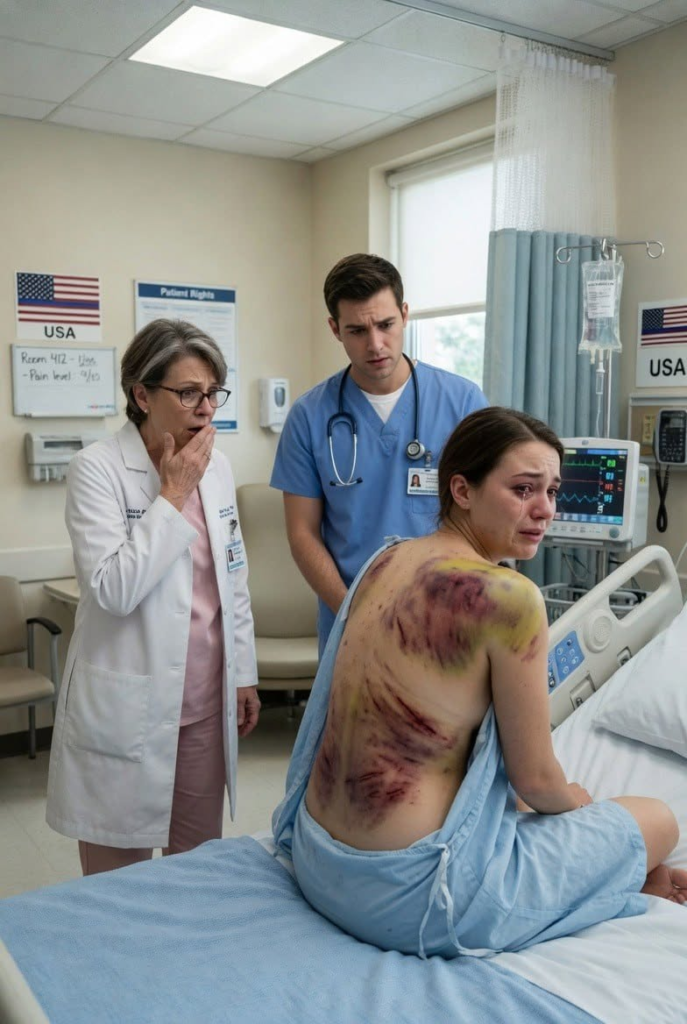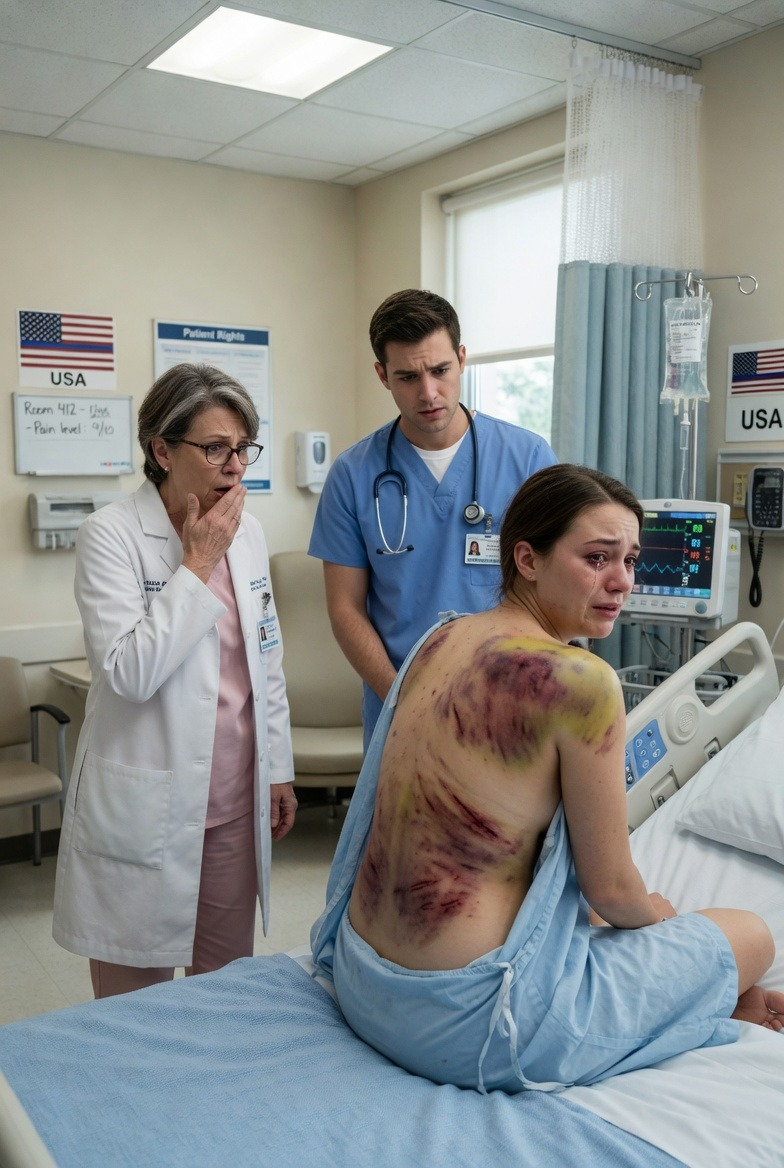
a former colleague called me and said my daughter had been rushed to the emergency room. I got there in under ten minutes. As soon as I arrived, my colleague met my eyes and said, “You need to witness this yourself.” Then I saw my daughter’s back… and everything inside me froze. What I saw made my blood run cold.
My daughter’s husband smiled at dinner like a saint. Three hours later, under the white glare of St. Catherine’s emergency lights, I saw the map of his cruelty carved across her back. The hallway smelled of antiseptic, rainwater, and old coffee burned too long in the nurses’ station pot. Monitors beeped behind thin curtains. Rubber soles whispered over polished tile. It was almost quiet.
That made it worse.
The call came at 11:47 p.m.
“Margaret,” Dr. Ellis said, his voice low. “It’s Anna. She’s in my emergency room.”
I was sixty-eight, retired, and supposedly fragile. That was what people saw first: white hair, slim hands, quiet shoes, a widow who brought lemon cakes to charity auctions. They forgot those hands had opened human chests for forty years and kept hearts alive while men with larger egos trembled beside me.
“I’m coming,” I said.
I reached St. Catherine’s in eight minutes. The rain had turned the hospital entrance slick and silver, and the automatic doors breathed warm air into my face as I stepped inside. I had spent half my adult life in buildings like that. I knew the sounds. The clipped voices. The curtain rings scraping. The hard little hush that gathers when staff are trying not to panic.
Ellis met me outside trauma bay three. His surgical cap was crooked. His face was gray.
“You need to witness this yourself.”
He pulled the curtain back.
Anna lay on her stomach, face turned toward me, lips split, one eye swollen. But it was her back that stopped the world. Bruises layered over bruises. Old yellow stains beneath fresh purple welts. A burn near her shoulder. Finger marks on her ribs.
Not one fall. Not one accident. Not clumsiness.
A history.
My daughter opened her good eye.
“Mom,” she whispered. “Don’t let him take me home.”
Something ancient and cold moved through me.
For one savage second, I saw my hands around Daniel’s throat. I saw forty years of discipline vanish in the space between one breath and the next. Then I folded that image away and became still.
Surgeons learn early that rage is useless if your hands shake.
Behind me, a man laughed softly.
Daniel stood by the nurses’ station in an expensive coat, hair wet from rain, holding a phone like a weapon.
“My wife is clumsy,” he said. “She fell. Again.”
I turned.
He smiled wider. “And before you start playing detective, remember you’re not her doctor. You’re retired.”
Ellis stepped forward. “Daniel, leave.”
Daniel ignored him. “Anna gets emotional. You know women. And Margaret here…” He looked me up and down. “She’s grieving, lonely, dramatic.”
Anna flinched at his voice.
That was enough.
The nurses had gone quiet. One stood with a clipboard pressed flat against her chest. Another kept her hand on the curtain ring but did not move it. A resident at the computer stopped typing, fingers suspended over the keys. Even the security guard at the far end of the hall looked down at the floor as if the tile had suddenly become fascinating. Daniel’s voice hung there, polished and poisonous, and every person in that hallway understood more than they wanted to admit.
Nobody moved.
I touched Anna’s hair. It was damp at the temple. Her skin was fever-warm beneath my fingers.
“You are safe.”
Daniel leaned close. “No, she isn’t. She’s my wife.”
That sentence told me everything. Not that he loved her. Not that he feared losing her. That he owned her. Men like Daniel do not confess with words like guilt. They confess with grammar.
I looked at him then, really looked. Not as a mother. As a surgeon studying rot before cutting it out.
“You should go home,” I said softly.
He smirked. “That’s it?”
“For tonight.”
He believed he had won. Cruel men often mistake calm for surrender.But while he laughed into the hallway, I asked Ellis one question.
“Did you photograph everything?”
His eyes met mine.
“Yes.”
“Good,” I said.
Ellis reached for the sealed trauma packet: dated intake sheet, body map, wound photographs, nurse’s notes, and Anna’s whispered statement written in blue ink at 12:03 a.m.
Daniel’s smile flickered.
Then the elevator doors opened behind him.
And for the first time that night, Daniel’s confidence drained out of his face like water.
PART 2
The elevator doors slid open with a soft chime.
Out stepped a woman in a navy suit carrying a thick folder against her chest.
Most people in the hospital knew her.
Rachel Monroe. Hospital Administration. Former prosecutor.
She walked with the calm confidence of someone who had spent years dismantling lies for a living.
Daniel’s smile disappeared.
“What’s this?” he asked.
Rachel didn’t answer him.
She looked directly at me.
“Dr. Margaret Hayes?”
“Yes.”
“I’m sorry we’re meeting under these circumstances.”
Then she lifted Anna’s file.
“And I think you’ll want to hear what we’ve found.”
The hallway became silent.
Daniel laughed nervously.
“Found what? My wife fell.”
Rachel opened the folder.
“Interesting.”
She pulled out several papers.
“Because according to this emergency room’s records, your wife has suffered seven separate injuries over the last three years.”
Daniel’s face hardened.
Rachel continued.
“Broken wrist.”
She placed one paper on the counter.
“Concussion.”
Another paper.
“Two cracked ribs.”
Another.
“Dislocated shoulder.”
Another.
“Lacerations requiring stitches.”
Another.
Every document carried the same explanation.
Accident.
Fall.
Clumsy.
Walked into a door.
Slipped in the shower.
The excuses stacked higher and higher.
Daniel swallowed.
Rachel closed the folder.
“The problem, Mr. Brooks, is that patterns are difficult to hide.”
For the first time, Daniel looked worried.
“Are you accusing me of something?”
“No.”
Rachel smiled slightly.
“I’m observing.”
The security guard had moved closer.
The nurses pretended to work while listening to every word.
Inside trauma bay three, Anna stared toward the curtain opening.
Hope flickered in her bruised eye.
Daniel shoved his hands into his pockets.
“You people are overreacting.”
Rachel nodded.
“Perhaps.”
Then she pulled out one final document.
“And perhaps you’re forgetting your wife isn’t the only person who has spoken tonight.”
Daniel froze.
I felt it immediately.
That tiny shift.
The moment a predator realizes the room is no longer under his control.
“What does that mean?” he asked.
Rachel looked toward Ellis.
Ellis answered.
“One of your neighbors called.”
Daniel’s face drained white.
“A neighbor reported hearing screaming repeatedly over the last year.”
Rachel added another paper to the pile.
“Another neighbor submitted security footage from two months ago.”
Daniel’s mouth opened.
Nothing came out.
“The footage shows Anna running outside barefoot at 2:14 a.m.”
Rachel’s voice remained calm.
“You dragged her back inside by her arm.”
Nobody spoke.
The hallway seemed to stop breathing.
Daniel suddenly pointed at Anna.
“She’s lying.”
His voice cracked.
“She’s unstable. She drinks.”
Anna burst into tears.
Not loud tears.
The quiet kind.
The kind that come from carrying terror for too long.
I sat beside her bed.
Took her hand.
And felt how badly it was shaking.
Then she whispered something.
Something only I could hear.
“Mom…”
I squeezed her fingers.
“What is it, sweetheart?”
Fresh tears rolled down her swollen face.
“I thought nobody would believe me.”
The words nearly broke me.
Not because they were dramatic.
Because they were honest.
For years she had been living inside a prison built from fear.
Fear that people would side with her charming husband.
Fear that nobody would see the truth.
Fear that escaping would make things worse.
And now she was finally watching the walls crack.
Daniel suddenly stepped forward.
“Anna.”
His voice changed.
Softer now.
Desperate.
Manipulative.
The voice abusers save for when witnesses appear.
“Baby, tell them.”
Anna flinched.
Rachel immediately stepped between them.
“You need to leave.”
Daniel glared.
“You can’t make me.”
The security guard finally moved.
A large man named Hernandez.
I’d known him for years.
He stepped beside Rachel.
“Actually,” he said quietly, “we can.”
Daniel laughed.
“On what grounds?”
Hernandez looked at the file.
Then at Anna.
Then back at Daniel.
“Because she asked us to protect her.”
Those words hit harder than any accusation.
Because they gave Anna something Daniel had spent years taking away.
Choice.
Power.
A voice.
Daniel looked around the hallway.
Nobody supported him.
Not the nurses.
Not Ellis.
Not Rachel.
Not security.
Not me.
For the first time all night, he stood completely alone.
His confidence shattered.
“You’ll regret this.”
Rachel raised an eyebrow.
“Is that a threat?”
Daniel realized his mistake immediately.
Too late.
Hernandez took one step closer.
“Time to go.”
The security guard escorted him toward the elevators.
Daniel twisted around one final time.
His eyes landed on Anna.
For years that look had probably terrified her.
Controlled her.
Silenced her.
Tonight something was different.
Anna didn’t look away.
She stared back.
And Daniel saw it.
The fear was gone.
The elevator doors opened.
He disappeared inside.
The doors closed.
And just like that—
the monster was no longer in the room.
Anna started sobbing.
I wrapped my arms around her carefully, avoiding the injuries.
For a long time neither of us spoke.
The nurses quietly returned to work.
The monitors beeped.
Rain tapped against distant windows.
Life continued.
But everything had changed.
Then Ellis walked over carrying a small sealed envelope.
“Margaret,” he said.
“What is it?”
He handed it to me.
“We found this hidden inside Anna’s purse.”
I looked down.
My daughter’s handwriting covered the front.
Three words.
For Mom Only.
My heart stopped.
Slowly, I opened the envelope.
Inside was a letter.
And after reading the first sentence, I realized something horrifying.
Anna had written it because she never expected to survive long enough to tell me the truth herself.