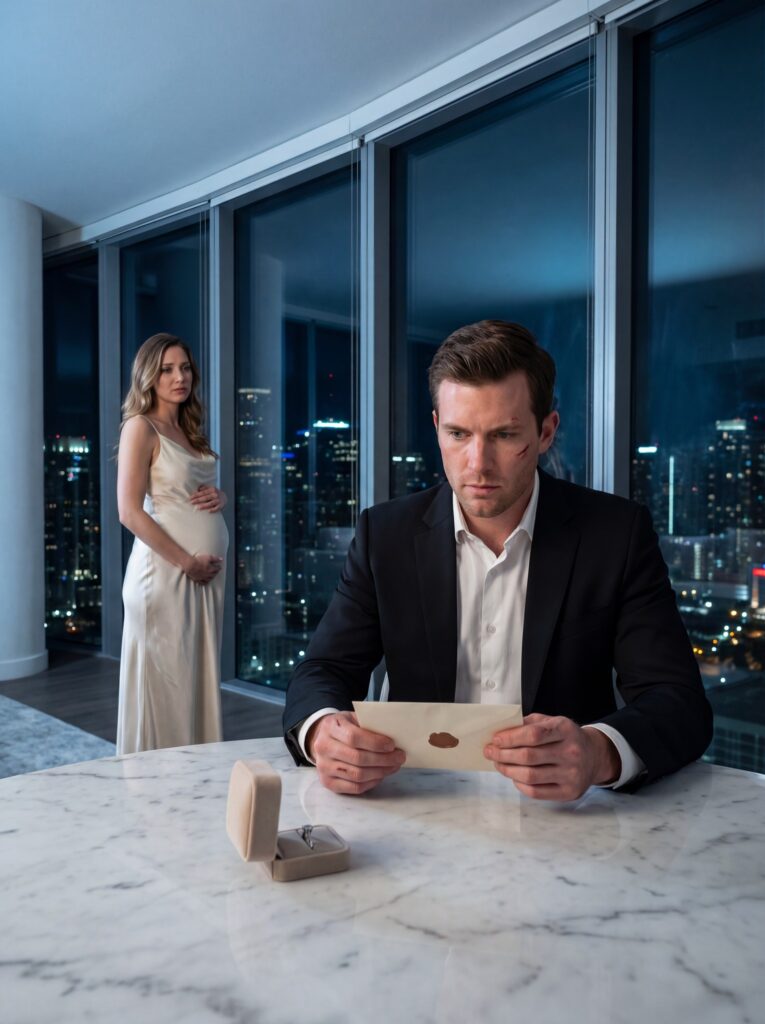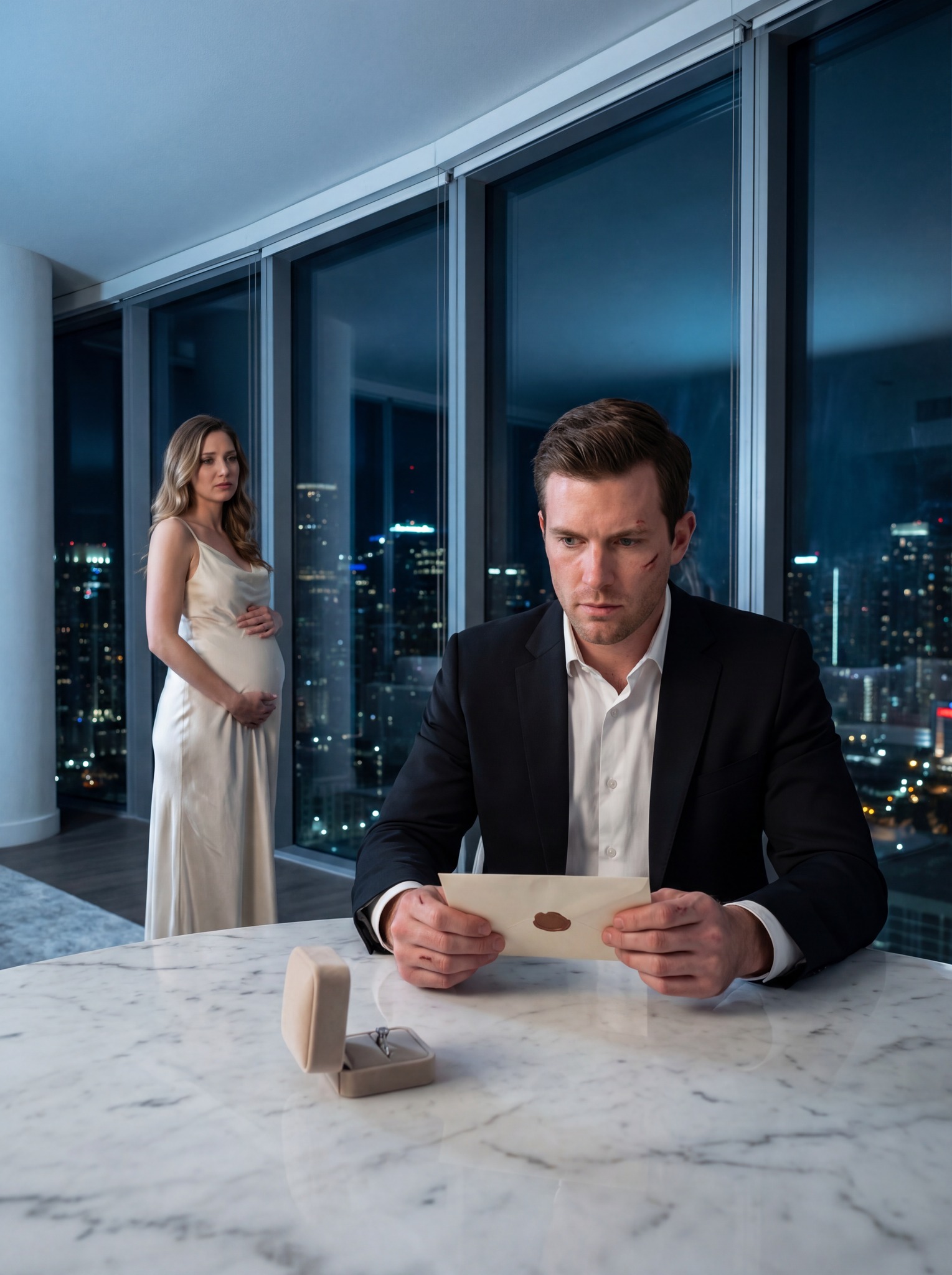
The Morning The Ring Was Left Behind
When Nathaniel Cross pushed open the door of his high-rise condominium just after sunrise, still carrying the scent of champagne and another woman’s perfume on his tailored wool coat, he expected tension waiting for him inside, perhaps tears or sharp questions or the familiar tremor in his wife’s voice that he had learned to dismiss with polished explanations, because over the past several months he had grown accustomed to smoothing over his absences with phrases about late meetings and demanding clients.
Instead, he was greeted by a silence so complete that it felt staged, as though the apartment had been carefully arranged to appear untouched, while something essential had already been removed.
He loosened his tie as he crossed the marble foyer, irritation simmering beneath the surface because he had prepared himself for confrontation, and he preferred conflict he could manage to quiet he could not interpret. The city skyline glowed pale gold beyond the glass walls, and for a fleeting moment he admired his own reflection in the window, still riding the confidence of a lucrative deal he had secured the night before at a boutique hotel downtown, where applause and admiration had come easily and loyalty had felt optional.
Then he noticed the earrings.
They were resting on the kitchen island, small diamond studs he had given his wife, Delilah, on their second anniversary, and which she had rarely removed, not even when she was exhausted enough to fall asleep fully dressed on the sofa. Beside them lay a folded sheet of cream stationery, her handwriting unmistakable in its steady curves.
His pulse shifted in his throat.
He looked toward the hallway leading to the bedroom and saw at once what his mind resisted: her coat was gone from the entry closet, the soft leather flats she wore to prenatal appointments were no longer lined neatly by the door, and the framed ultrasound image that had once been propped beside a jar of lavender bath salts had vanished from the refrigerator shelf.
The air felt thinner.
He reached for the letter, but before he could open it, something metallic near the bedroom threshold caught his attention. His wedding band, which he had removed the night before and slipped into his pocket before entering the hotel suite, was now lying on the hardwood floor near the doorway, placed deliberately where he would not miss it.
A tremor moved through him that had nothing to do with guilt and everything to do with realization.
Delilah had not left in anger. She had left with intention.
The Letter Without Accusation
Nathaniel unfolded the page slowly, expecting accusations, perhaps dramatic declarations, because he had always imagined that if Delilah discovered his affair she would respond with tears and pleading, as she had responded to smaller disappointments before.
What he found instead was measured restraint.
She wrote that she had learned the truth not from suspicion but from evidence that had been placed before her with clarity she could no longer ignore. She wrote that she had once believed marriage required endurance, that love meant staying even when respect began to erode, but that she now understood endurance without dignity was not virtue. She explained that she would not expose him publicly, not for revenge and not for spectacle, because her energy would be devoted to protecting the child she carried and to building a life that did not depend on his promises.
The final line was almost gentle in tone, which made it cut deeper.
“I hope she was worth everything you’re about to lose.”
Nathaniel lowered himself into one of the barstools as if his legs had forgotten how to hold him upright. He scanned the apartment, noticing details he had never valued before: the absence of the knit blanket she used on cold evenings, the empty shelf where her design journals had been stacked, the missing ceramic mug with a small chip on its rim that she refused to discard because it reminded her of their first apartment in Chicago.
He walked to the bedroom and opened the closet, finding rows of vacant hangers swaying faintly as if stirred by a draft. The drawer where she kept maternity clothing stood open and bare. On the floor near the window lay her appointment calendar, torn in half, the dates of checkups no longer visible.
For the first time in his adult life, Nathaniel felt something he could not negotiate.
The Drive Toward Uncertainty
Several miles away, Delilah Hart sat in the passenger seat of a dark SUV moving steadily along a quiet suburban highway, her hands wrapped around a paper cup of coffee that had long since gone lukewarm, while early light filtered through bare branches lining the road. She stared out the window at neighborhoods she had once frequented, wondering how something so familiar could feel so distant overnight.
The man driving kept his voice low and even, the way one speaks when careful not to disturb fragile equilibrium.
“You should take a sip,” he said gently. “You haven’t had anything since yesterday.”
She obeyed, though her hands trembled slightly.
The driver was Harrison Cole, a corporate compliance attorney whose reputation in Chicago’s financial sector rested not on theatrics but on meticulous precision, and whose involvement in Nathaniel’s company had begun months earlier when irregularities in certain quarterly reports had drawn quiet attention. Harrison had been the one to approach Delilah discreetly after confirming that manipulated accounts were not accidental errors but deliberate distortions.
“Are you in pain?” he asked, glancing briefly at her abdomen.
“No,” she replied after a moment. “Just overwhelmed.”
He nodded.
“Leaving someone who chips away at your confidence doesn’t feel triumphant,” he said. “It feels uncertain. But uncertainty is better than staying where you’re diminished.”
She swallowed, unsure whether relief or fear dominated her chest.
“I didn’t want a spectacle,” she admitted softly. “I just needed space before he turned everything into a negotiation.”
A faint curve touched Harrison’s mouth, though his eyes remained serious.
“You came to the wrong person if you wanted things to stay quiet forever,” he replied. “But you came to the right person if you wanted them handled properly.”
Delilah closed her eyes briefly, feeling the steady hum of the engine beneath her feet and, beneath that, the subtle movement within her body that reminded her she was not alone.
The Office That Was No Longer Secure
By midmorning, Nathaniel stormed into his downtown office building, ignoring the curious glances of assistants and junior analysts who had already sensed something unusual in the air, because overnight internal emails had circulated requesting an emergency board meeting.
He shut his office door with more force than necessary and crossed to his desk, where a drawer he always kept locked appeared slightly ajar.
His stomach tightened.
Inside that drawer he had stored an external hard drive containing private records that, if examined carefully, would reveal altered earnings statements and hidden accounts that had propped up the company’s image during volatile quarters. He had told himself such adjustments were temporary measures, strategic maneuvers in a competitive market, yet he knew they were the foundation of his expanding reputation.
The drive was gone.
Papers were shifted just enough to signal deliberate search rather than careless tidying. A framed photograph of him and Delilah, taken at a lakeside fundraiser the previous summer, lay face down on the carpet.
His phone rang.
“Mr. Cross,” a calm male voice said, “the board would like you in the conference room immediately.”
Nathaniel felt heat rise behind his eyes.
“About what?” he demanded.
There was a brief pause.
“It would be better to discuss this in person.”