She reached St. Catherine’s in eight minutes. Rain snapped against the windshield. The emergency entrance smelled of antiseptic, wet wool, and old coffee burned to bitterness.
Ellis met her outside trauma bay three. His surgical cap was crooked, and his face was gray in a way Margaret had seen only when a physician was trying not to become human too soon.
“You need to witness this yourself,” he said.
Then he pulled the curtain back.
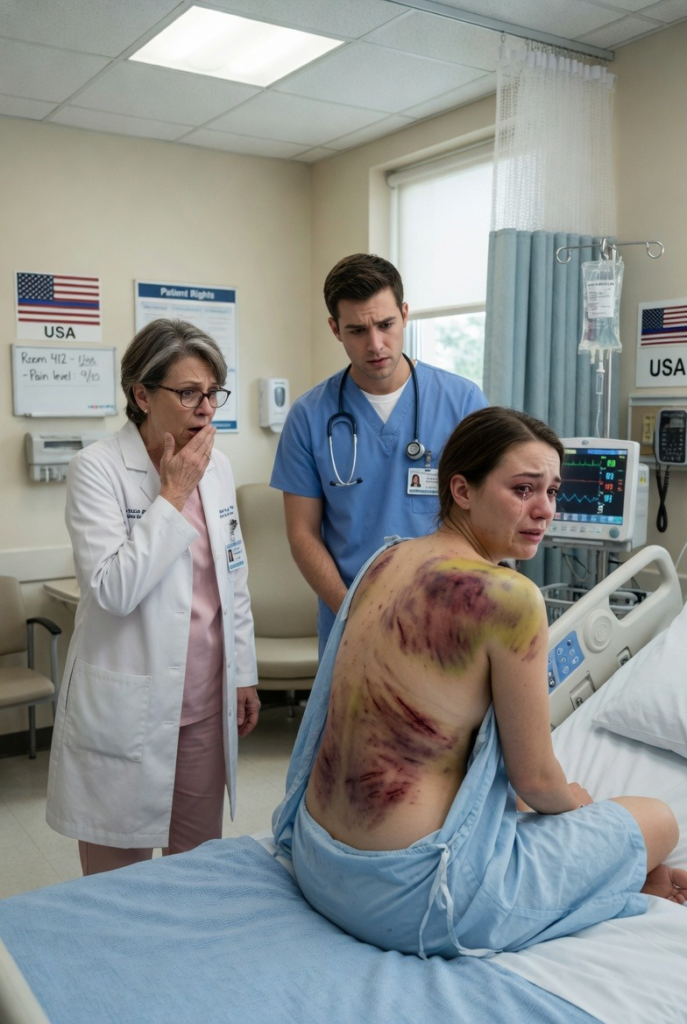
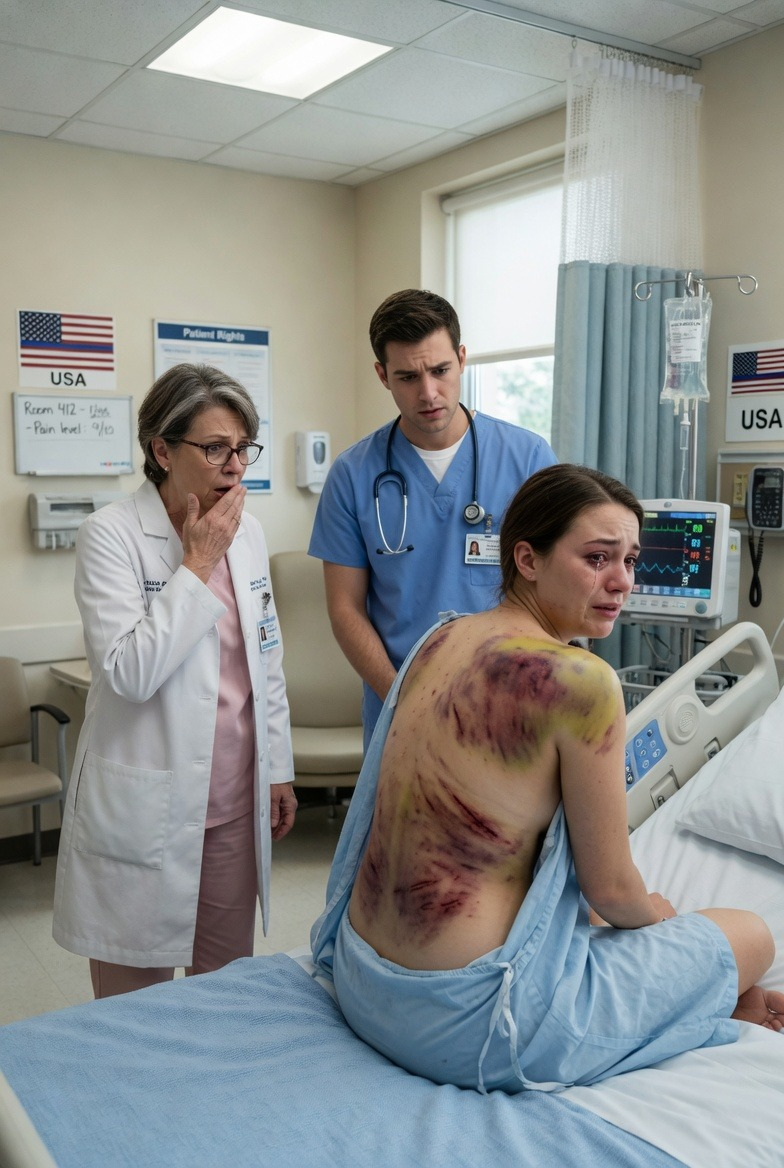
Anna lay on her stomach beneath bright clinical lights. Her lips were split. One eye had swollen nearly shut. Her fingers curled around the sheet as if it might keep her in the room.
But her back was what stopped Margaret’s breath. Bruises layered over bruises. Old yellow stains beneath fresh purple welts. A burn near the shoulder. Finger marks along the ribs.
Margaret had seen trauma before. She had separated accident from intention for decades. Accidents were chaotic. This was organized. This was repeated. This was a map.
Anna opened her good eye. “Mom,” she whispered. “Don’t let him take me home.”
That sentence did what no photograph could do. It named the danger while the danger was still close enough to hear.
Behind Margaret, Daniel laughed softly.
He stood by the nurses’ station holding his phone like a weapon. His hair was wet from rain, his coat expensive, his expression offended rather than afraid.
“My wife is clumsy,” he said. “She fell. Again.”
The room froze. A nurse stopped unrolling gauze. A resident paused over the hospital intake form. A clerk looked down at her keyboard with sudden devotion.
The monitor kept beeping. Curtain rings trembled once from Ellis’s grip, then went still. Nobody wanted to be the first person to admit what everyone had already understood.
Daniel turned his smile toward Margaret. “And before you start playing detective, remember you’re not her doctor. You’re retired.”
Ellis stepped forward. “Daniel, leave.”
Daniel ignored him. “Anna gets emotional. You know women. And Margaret here…” He looked her up and down. “She’s grieving, lonely, dramatic.”
Anna flinched at his voice. That tiny movement finished the diagnosis.
Margaret touched Anna’s hair. It was damp at the temple, just as it had been when Anna was five and feverish, reaching for her mother before she was fully awake.
“You are safe,” Margaret said.
Daniel leaned closer. “No, she isn’t. She’s my wife.”
He thought the word wife worked like a locked door. Margaret heard something else inside it. Not love. Not partnership. Ownership.
For one ugly heartbeat, she imagined lifting the metal tray beside the bed. She imagined ending his smile with one clean movement. Then surgery returned to her hands.
Rage is useless if it shakes your fingers. Margaret had built a life on controlled cuts, measured pressure, and knowing exactly where damage ended and repair began.
“You should go home,” she said softly.
Daniel smirked. “That’s it?”
“For tonight.”
He believed her calm was surrender. Cruel men often make that mistake because terror has taught them to confuse volume with power.
When Daniel laughed into the hallway, Margaret looked at Ellis. “Did you photograph everything?”
His eyes met hers. “Yes.”
The forensic process had already begun. Ellis had documented the visible injuries, ordered imaging, logged the burn, and flagged the chart for suspected domestic assault.
The nurse had completed a hospital intake form. The resident had started an incident report. Every photograph had been time-stamped, numbered, and sealed under St. Catherine’s evidence procedure.
A witness can be doubted; a chart can be subpoenaed. Margaret knew that better than anyone in the room.
Ellis reached beneath the chart and pulled out the sealed evidence packet. “There is one more thing you need to see.”
Inside were photographs under clinical light. Shoulder. Ribs. Wrist. Lower back. Burn mark. Finger bruises. Each image made Daniel’s story smaller and more ridiculous.
“Those are private,” Daniel snapped.
“No,” Ellis said. “Those are documented injuries.”
Then the nurse slid a specimen bag across the counter. Inside was a flash drive with a St. Catherine’s security label and one printed time: 10:36 p.m.
Daniel saw it and went still.
The camera near the east ambulance entrance had recorded him pulling Anna from the passenger seat before calling for help. It did not show a fall. It showed fear.
It showed Anna trying to step away from him. It showed Daniel gripping her arm hard enough that the nurse watching the footage later covered her mouth.
When hospital security arrived, Daniel tried charm first. Then offense. Then threat. Each version lasted less than a minute because none of them changed the evidence.
Margaret did not shout. She stood beside Anna’s bed while Ellis called the police liaison and the charge nurse moved Daniel out of trauma bay three.
Daniel kept saying, “This is a misunderstanding.”
Anna cried without sound. Margaret held her hand and counted each breath until the shaking slowed.
At 1:18 a.m., an officer took Anna’s statement in a private room. At 1:42 a.m., the injury photographs were entered with the hospital report.
By dawn, Daniel’s polished version of events had collapsed under ordinary paperwork. Not revenge. Not drama. Paperwork, timestamps, and one camera he forgot existed.
Margaret stayed through every form. She signed nothing for Anna. She answered nothing for Anna. She only sat close enough for her daughter to borrow steadiness.
That mattered. For months, Daniel had trained Anna to believe every choice required permission. In that room, question by question, Anna began taking her own voice back.
The protective order came first. Then the separate apartment arranged through a hospital advocate. Then the attorney who spoke to Anna directly and never once looked to Margaret for approval.
The court process was not quick, and it was not clean. Daniel denied everything. He suggested Anna bruised easily. He suggested Margaret had poisoned her daughter against him.
But the evidence did not blush or forget. The photographs remained. The medical chart remained. The 10:36 p.m. security footage remained, bright and quiet and impossible to flatter.
When the judge reviewed the packet, Daniel’s attorney stopped using the word clumsy. That was the first mercy the courtroom offered Anna.
Daniel was ordered to stay away from her. Later, after the full investigation and testimony, he faced consequences he had never imagined when he laughed in that hallway.
Margaret did not celebrate. Surgeons understand that removing rot is not the same as healing tissue. Healing takes longer. It aches. It scars. It requires patience.
Anna moved into the small guest room at Margaret’s house for a while. The first week, she woke at every car door outside. The second week, she slept four straight hours.
One morning, she came downstairs wearing short sleeves. Margaret pretended not to notice at first. Then Anna lifted her chin and said, “I don’t want to hide today.”
Margaret set two mugs on the table. “Then we won’t.”
Months later, Anna returned to St. Catherine’s for a follow-up appointment. She walked through the emergency entrance slowly, but she did not tremble when the doors opened.
The place still smelled of antiseptic and old coffee. The lights still hummed. Somewhere, a monitor still beeped as if nothing in the world had changed.
But something had changed. The night Margaret saw her daughter’s back and felt her blood run cold became the night Anna was finally believed.
Margaret was a retired surgeon, yes. She no longer opened chests beneath bright lamps. But she still knew how to recognize damage, name it, document it, and refuse to let it spread.
And when Anna asked months later why her mother had stayed so calm, Margaret told her the truth.
“Because he wanted rage,” she said. “Rage would have helped him. Evidence helped you.”
A witness can be doubted; a chart can be subpoenaed. That sentence became the quiet lesson of their lives afterward, proof that sometimes love does not roar.
Sometimes love stands beside a hospital bed, keeps its hands steady, and says to the darkness, not this one. Not again. Not while I am still here.