Keith and I are in love.
We’re starting over.
Kyle needs stability, and you always wanted to help.
Please don’t make this harder than it has to be.
I remember reading that last line more than once.
Please don’t make this harder than it has to be.
As if I were the problem.
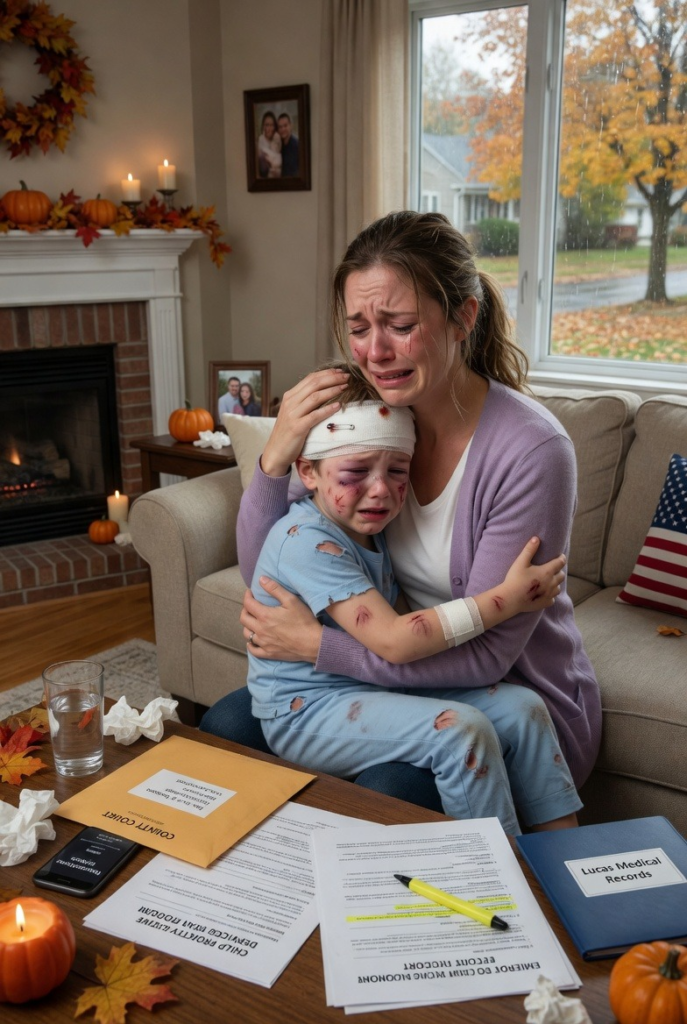
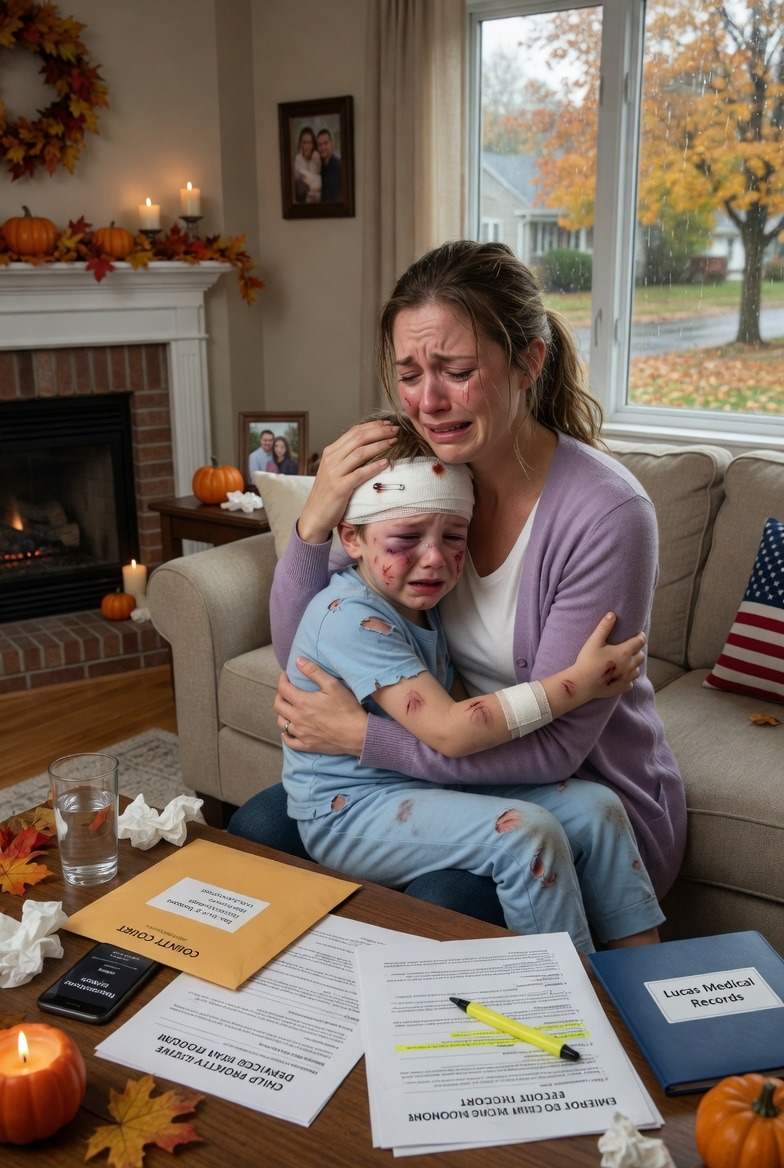
As if a five-year-old boy sitting alone in my living room after his mother ran away with my husband was just an inconvenience we all needed to handle neatly.
Under the note, Keith had signed the divorce papers.
Every signature was neat.
Every date was filled in.
Nothing looked rushed, panicked, or accidental.
It had been planned.
That realization moved through me slowly, like cold water rising around my knees.
People imagine betrayal as shouting, broken plates, and slammed doors.
Sometimes betrayal arrives already printed, signed, and stacked on your kitchen counter.
I stood there with the paper shaking in my hand while Kyle waited in the living room.
He was watching my face.
I could feel it.
He was trying to decide whether he had been left with someone safe or whether the whole world had finally run out of safe places.
I wanted to call Sharon and scream.
I wanted to drive around until I found Keith and throw his ring at his face.
I wanted to collapse onto the kitchen floor and let the whole truth break me open.
Instead, I folded the note once.
Then I folded it again.
Then I went back into the living room, knelt in front of Kyle, and put both hands where he could see them.
“You’re safe here,” I told him.
My voice sounded calm.
My hands were trembling.
Six months before that night, Sharon had told me Kyle was dying.
She came to my house on a Sunday afternoon while Keith and I were cleaning up after lunch.
Her eyes were swollen.
Her mouth shook.
She said there was a rare blood disorder.
She said the doctors were doing what they could.
She said they might have six months if they were lucky.
I remember Keith standing behind her with his arms crossed, staring at the floor like a man too devastated to speak.
I thought he was grieving with her.
Now I know he was hiding behind her.
Sharon cried into my shoulder in my own kitchen.
She smelled like hairspray and coffee.
I held her because she was my sister.
I believed her because she was my sister.
I believed Keith because he was my husband.
That was the trust signal they used against me.
After that, Sharon started asking if Kyle could stay with us for a weekend so she could catch up on sleep.
Then it became two weekends.
Then it became Friday through Monday.
Then she would drop him off with the same oversized backpack and not answer her phone until late at night.
At first, I told myself grief made people strange.
I told myself fear made people messy.
I told myself Sharon was doing the best she could.
Kyle did not complain.
That hurt most of all.
He would set his backpack by the front door and ask where he should sit, as if a child needed permission to exist in his aunt’s house.
Once, while I was making him scrambled eggs, he stood in the kitchen doorway and said, “I won’t be trouble.”
I turned off the stove because I could not look at the eggs anymore.
No five-year-old should know that sentence.
By the third month, I began writing things down.
It was not some grand plan at first.
It was just a spiral notebook I kept near the phone because something in me had stopped trusting the story I was being told.
Saturday, 9:12 a.m., Kyle refused eggs but ate dry toast like he was afraid someone would take it away.
Sunday, 2:35 p.m., he fell asleep sitting up during a cartoon.
Monday, 6:08 p.m., Sharon said the clinic changed his medication but could not remember the name.
I called the number she had given me for his specialist.
Disconnected.
I called her.
No answer.
I asked Keith if he knew which doctor Kyle was seeing.
He snapped at me for prying.
That was the first time I felt something colder than worry.
One afternoon, I took Kyle to the park because he had been staring out the window at the swings.
He carried a little red plastic shovel from my porch even though there was no sandbox nearby.
He ran for maybe five minutes.
Then his legs seemed to fold under him.
He went down in the grass with that shovel still in his hand.
I remember the sound I made.
I remember scooping him up.
I remember driving to Riverbend Children’s Clinic with my hazard lights blinking, praying and cursing in the same breath.
The doctor did not rush her words.
That was how I knew the news was not simple.
She asked questions.
She looked at Kyle’s arms, his eyes, the color of his skin.
She ordered bloodwork.
She checked his chart twice because the story I gave her and the body in front of her did not match.
When she finally sat me down, she spoke gently.
Kyle was not terminal.
Kyle was severely malnourished.
There were deficiencies.
There was anemia.
There were delayed growth markers.
There were signs of chronic neglect.
Not a rare blood disorder.
Not six months to live.
Not fate.
Neglect.
A lie.
A mother building a tragedy around her own child so she could abandon him and still feel like the wounded one.
I went numb in that exam room.
Kyle sat on the paper-covered table with a sticker on his shirt and asked if he had done something wrong.
That question was almost worse than the diagnosis.
I told him no.
Then I told him no again because he did not believe me the first time.
I kept everything from that day.
The intake form.
The bloodwork.
The nutrition plan.
The pediatric report with Sharon’s name still typed as mother and Keith’s name scratched in as emergency contact in his own handwriting.
I made copies and put them in a folder.
I did not know yet what I would need them for.
I only knew the truth had to live somewhere outside my memory.
Then I took Kyle home.
Healing a child does not look dramatic from the outside.
Nobody plays music over it.
Nobody applauds when he finishes oatmeal.
Nobody sees the way he flinches the first time a cabinet door closes too hard.
It was soup on nights when his stomach hurt.
It was clean pajamas warm from the dryer.
It was vitamins lined up beside the sink.
It was sitting on the bathroom floor while he brushed his teeth because he did not like being alone upstairs.
It was learning which night-light made the room feel safe and which shadows scared him.
It was saying, “You are not a burden,” so many times that the words became part of the house.
Love is not proven by the loudest promise.
Most of the time, it is proven by who stays for the quiet chores.
Kyle gained weight slowly.
His cheeks filled out.
His hair got thicker.
He stopped hiding food in his backpack.
He laughed one day at a cartoon, a real laugh, sudden and bright, and I had to turn toward the sink because I did not want him to see me cry.
At seven, he called me Mom by accident.
The word slipped out while he was tying his shoes for school.
Then his whole face collapsed.
“I didn’t mean to,” he said.
I sat on the floor in front of him and told him he could call me whatever made him feel safe.
He cried so hard he hiccuped.
I held him until the school bus came and went.
We were late that day.
I did not care.
At eleven, he ran the mile at school faster than anyone expected and came home with his cheeks red from pride.
At thirteen, he outgrew me and started reaching the top shelf in the pantry without thinking.
At fifteen, he asked about Sharon.
Not because he missed her, exactly.
Because children who are abandoned still need to know the shape of the door that closed behind them.
I had kept the note in an envelope.
I had thought about burning it a hundred times.
I never did.
Some lies rot when you keep them sealed too long, but some proof has to survive until the person it belongs to is old enough to look at it.
I gave it to him at the kitchen table.
His hands were much bigger than they had been the night he first held that throw pillow.
He read Sharon’s words once.
He did not cry.
He folded the paper exactly the way I had folded it the night she left.
Then he said, “She didn’t leave me with you.”
I waited.
He looked at the envelope, then at me.
“She lost me to you.”
That was the day I understood he had survived more than neglect.
He had survived the story Sharon tried to write for him.
Fifteen years passed from the night I found him in that chair.
Our life became ordinary, which felt like a miracle.
There were grocery runs and school forms, burned dinners, doctor checkups, track meets, laundry piles, bills on the counter, and quiet evenings when he sat at the kitchen table doing homework while I packed lunches for the next day.
Keith never called.
Sharon never wrote.
No birthday card came.
No Christmas gift.
No apology.
Sometimes I wondered whether they told people Kyle had died.
Sometimes I wondered whether they simply stopped saying his name.
Then, on a rainy Thursday evening, I went to the supermarket for strawberries.
That is how ordinary the day was.
I was standing in the produce aisle under the fluorescent lights, holding a carton in one hand and comparing prices like my life had not once been torn open by people who might still be breathing somewhere nearby.
Then I heard Sharon laugh.
Bodies remember certain sounds.
Mine went still before my mind caught up.
I turned.
She was standing near the apples in a nice coat, her hair dyed brighter than I remembered, her mouth curved into the same smile she used when she wanted to look innocent.
Keith stood beside her.
He was older and heavier, but the arrogance had survived.
He wore it the way some men wear cologne, too much and too close.
They saw me.
For three seconds, all of us just stared.
The rain tapped against the front windows.
The automatic doors opened and closed behind customers coming in with wet carts.
Somewhere near the checkout lanes, a scanner beeped.
Then Sharon smiled wider.
“Well,” she said. “Melissa. Look at you.”
Keith’s eyes dropped to my cart, then to my left hand.
“Still playing saint?” he asked.
There are insults that hurt because they are sharp.
There are others that hurt because they prove the person never understood what they stole.
I could have walked away.
I probably should have.
But Sharon leaned closer, and her perfume hit me, sharp and floral, the same kind of sweetness that used to fill my kitchen before everything turned dark.
“So,” she said lightly, “whatever happened to Kyle?”
The words did not sound like grief.
They sounded like curiosity.
Keith gave a low laugh.
“Yeah,” he said. “Poor kid. He was always kind of a failure, wasn’t he?”
The cashier at the end of the lane stopped with a bag of oranges in her hand.
An older woman beside the apples lowered her list.
A teenage stocker froze with a loaf of bread halfway to the shelf.
The whole aisle seemed to tighten around us.
My fingers squeezed the strawberry carton until the plastic creaked.
For one ugly second, I imagined throwing it at Keith’s face.
I imagined the strawberries bursting against his shirt.
I imagined Sharon’s perfect smile finally cracking.
I did none of that.
Rage can be hot and reckless.
But the kind that has waited fifteen years becomes cold enough to stand still.
“He’s not a failure,” I said.
Sharon blinked like I had missed the joke.
Keith smirked.
“What, did you name a dog after him or something?”
That was when the automatic doors slid open again.
A tall young man stepped into the store, rain darkening the shoulders of his jacket.
He paused just inside the entrance, scanning the aisles, and then his eyes found mine.
Kyle.
My son.
He was twenty now, broad through the shoulders, healthy in a way that still made some hidden part of me grateful every time I saw it.
His face carried pieces of the child he had been, but the fear was gone.
His jaw had sharpened.
His posture had steadied.
His eyes were the same.
He saw me first.
Then he saw them.
The strawberry carton slipped from my hand and dropped softly into the cart.
Sharon’s smile drained as if someone had pulled a plug.
Keith’s mouth opened, but nothing came out.
For the first time since I had known him, that man had no line ready.
Kyle walked toward us through the produce aisle.
Not fast.
Not angry in the way Sharon and Keith would have understood.
Calm.
Straight-backed.
Every step sounded final against the tile.
The cashier did not move.
The older woman by the apples covered her mouth.
The teenage stocker stared like he had forgotten where he was.
Kyle stopped beside me.
He did not ask who they were.
He knew.
He had known their faces from the photographs I finally let him see when he was old enough to ask.
He looked at Sharon, then at Keith, and for a moment nobody breathed.
The child they had turned into a lie was standing in front of them alive, grown, and no longer small enough to leave behind.
Sharon whispered his name.
Kyle did not soften.
He looked straight at the two people who had abandoned him and said