My Sister Stole My Penthouse While I Was Overseas. She Had No Idea the Door She Tried to Break Open Would Destroy Our Entire Family.
The first thing my younger sister did after breaking into my $2 million penthouse was smile at the security camera.
The second was announce, “We live here now.”
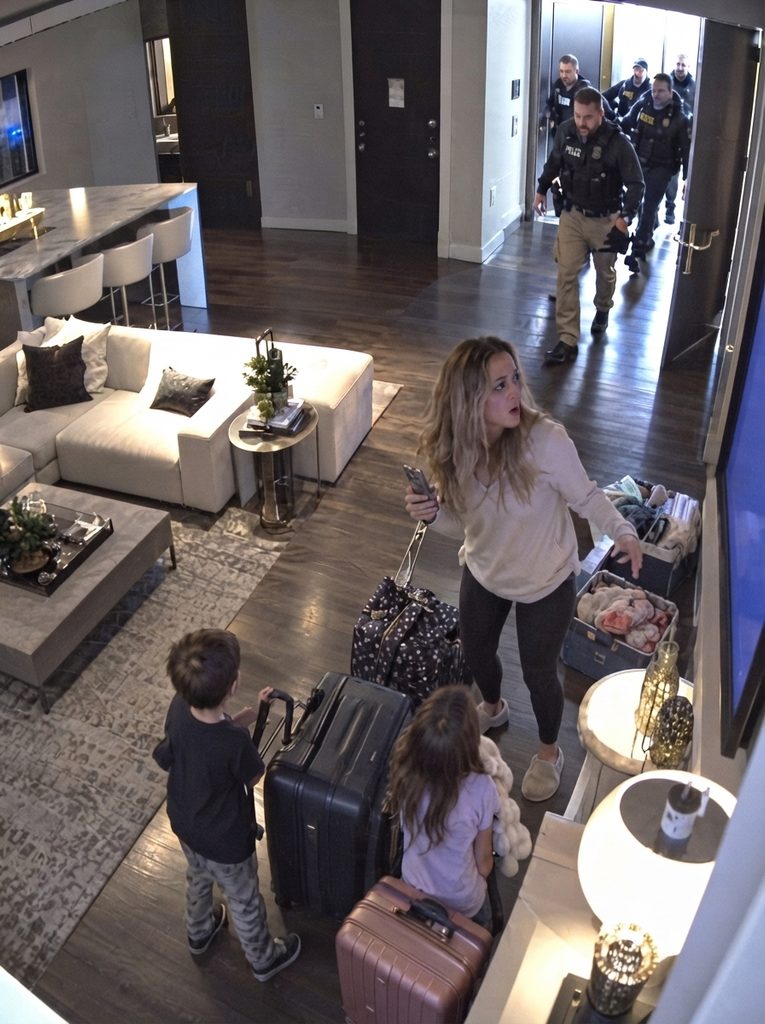
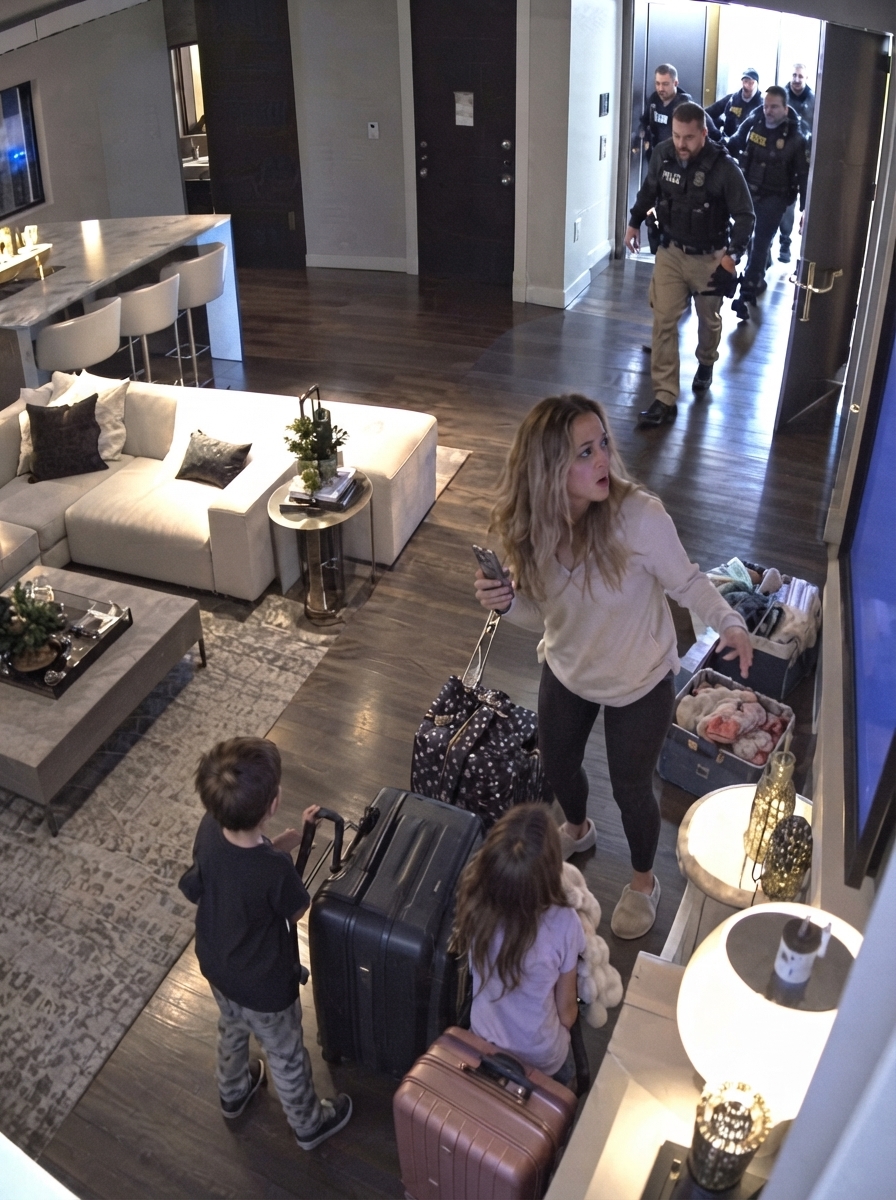
She had two children, three suitcases, several plastic storage bins, and absolutely no permission to enter my home.
I was thousands of miles away in London.
What Paige didn’t know was that I wasn’t the ordinary federal office worker our family believed me to be.
**I was Deputy United States Marshal Marissa Keane.**
And when my sister tried to break into the reinforced room at the end of my hallway, she activated a security response that would expose something far more dangerous than a family property dispute.
Something that had been quietly developing for months.
Something involving my father, a supposed lawyer, and the international fugitive investigation that had brought me to England.
But at 2:16 that morning, I knew none of it.
All I knew was that my phone wouldn’t stop vibrating.
“Send me the door code, Marissa. I’m outside with the kids.”
I stared at the message from my younger sister, Paige.
I was thirty-four years old, lying in a London hotel room after a fourteen-hour workday. My assignment involved tracking an international fugitive suspected of coordinating financial fraud across multiple countries.
It wasn’t glamorous work.
Most days involved reviewing records, following leads, coordinating with foreign authorities, and drinking terrible coffee.
I couldn’t share the details with my family.
They believed I handled administrative paperwork for the federal government.
I had allowed them to continue believing that because explaining my actual responsibilities would create more questions than I wanted to answer.
Another message arrived.
“Mom and Dad said this has gone on long enough. You don’t need that huge place all to yourself. We’re moving in tonight.”
I sat upright.
My penthouse.
She meant the home I had purchased six years earlier in Arlington, Virginia.
The one with floor-to-ceiling windows overlooking the Potomac, pale hardwood floors, a private elevator entrance, and a small balcony where I drank coffee whenever I managed to spend a morning at home.
The apartment had cost nearly two million dollars.
Every dollar had come from my earnings, savings, and carefully managed investments.
No family inheritance.
No parental contribution.
No loan from my father.
**My name was the only name on the deed.**
But my family had never cared much about that distinction.
To them, ownership was simply another word for selfishness whenever I owned something they wanted.
Growing up, I was the responsible daughter.
Paige was the one who needed understanding.
When Paige crashed her first car, I helped replace it.
When she fell behind on rent after her divorce, I covered three months.
When Dad’s furnace failed, I paid for the replacement.
When Mom accumulated thousands of dollars in credit card debt, I helped her negotiate repayment.
There was always another emergency.
And somehow, every emergency became my responsibility.
The one time I refused to pay for Paige’s vacation, my mother didn’t speak to me for two weeks.
“Family takes care of family,” she eventually said.
I asked why that rule never seemed to work in both directions.
She accused me of being disrespectful.
That conversation had stayed with me.
So had the silence afterward.
Now Paige was standing outside my home, acting as though our parents had the authority to give it away.
My phone vibrated again.
“Noah and Lily are exhausted. Don’t be cruel.”
Noah was nine. Lily was six.
They were good kids.
Noah loved dinosaurs and asked me questions about space whenever we talked. Lily had a stuffed rabbit named Buttons that she’d carried everywhere since preschool.
I adored them.
Paige knew that.
And she had brought them because she understood exactly how difficult they would make it for me to say no.
I opened my security application.
The hallway camera connected immediately.
Paige stood outside my door wearing gray sweatpants, worn sneakers, and a cream-colored quilted jacket. Her dark-blonde hair was twisted into a messy bun.
Noah was leaning against a suitcase.
Lily rubbed her eyes, clutching Buttons beneath her chin.
Plastic storage bins were stacked against the wall.
This wasn’t a visit.
**My sister had packed up her life and decided to move it into mine.**
I called her.
She declined.
Then another message appeared.
“Last chance. Give me the permanent code, or I’ll call a locksmith.”
I typed my answer.
“You do not have permission to enter my home. Leave immediately. Take the children somewhere safe.”
Paige responded with a laughing emoji.
Then she stepped toward the keypad.
I watched her enter six numbers.
My stomach dropped.
I recognized the code.
Three months earlier, I’d created temporary access for a maintenance appointment involving an inspection of the guest bathroom plumbing.
The appointment had been canceled.
I had forgotten to delete the code.
But I had never given Paige those numbers.
A warning appeared on the entry panel.
ONE-TIME SERVICE ACCESS.
ENTRY RECORDED.
NO RESIDENCY RIGHTS GRANTED.
Paige pressed Accept without reading it.
The lock clicked.
She smiled directly at the camera.
“We live here now.”
Then she opened my door.
For several seconds, I couldn’t move.
It wasn’t simply that she had entered without permission.
It was the expression on her face.
She looked victorious.
As though my absence, my objections, and my ownership meant nothing.
As though she had finally won something that had always belonged to her.
The interior security cameras activated.
I watched Paige step into the foyer and drop her purse onto my antique entry table.
“Noah, take the blue suitcase upstairs.”
The boy hesitated.
“Aunt Marissa said we can’t come in.”
Paige rolled her eyes.
“Your aunt has plenty of money. She’s just being dramatic.”
Lily looked around uncertainly.
“Are we sleeping here?”
“Of course, sweetheart,” Paige said. “This is our new home.”
Then she pointed toward the hallway.
“I’m taking the big bedroom.”
I stared at the screen.
That bedroom was the first room I had decorated after buying the penthouse.
I’d picked the furniture myself.
I’d painted the walls a soft blue-gray because it reminded me of the coastline where I’d spent summers during college.
My home wasn’t merely an expensive apartment.
It represented years of sacrifice, night shifts, danger, loneliness, and discipline.
Paige saw none of that.
She saw square footage.
Then she called our mother.
The microphone captured both sides of the conversation.
“We’re inside,” Paige announced proudly.
My mother’s voice came through the speaker.
“Good. I knew you’d figure it out.”
“What if Marissa makes us leave?”
“She won’t. Once the children are settled, she won’t have the heart to throw them out.”
Paige laughed.
“I already told Noah he’s getting the guest room.”
“Stay at least a few weeks,” Mom continued. “Your father says that makes things easier.”
“Easier how?”
I heard Dad speaking in the background.
“Tell her I talked to the lawyer. We need to establish residency.”
I went completely still.
**A lawyer.**
This wasn’t Paige making an impulsive decision.
My parents had been planning it.
They had discussed legal strategy.
They had involved my niece and nephew.
And they had chosen a night when they knew I would be overseas.
For the first time, I felt something worse than anger.
I felt betrayed in a way that made my own family suddenly seem like strangers.
I began saving the security footage.
Then I called Paige again.
She answered irritably.
“What now?”
“Leave my apartment.”
“Seriously, Marissa? We’re already inside.”
“That changes nothing.”
“You can’t expect me to raise two kids in some tiny rental when you have all this space.”
“I paid for this space.”
“Oh, congratulations. You have money.”
“Paige, listen carefully. You are trespassing. I’m asking you to leave voluntarily.”
Her voice sharpened.
“You’re really going to call the police on your own sister?”
“I don’t want to.”
“Then stop threatening me.”
She hung up.
I took a slow breath.
There was one part of the penthouse Paige absolutely could not enter.
My private office.
At the end of the east hallway stood a reinforced security door protecting an agency-approved remote workspace.
Behind it were encrypted communications equipment and secured work devices.
The room had independent intrusion detection and access controls.
Even when I wasn’t using it, attempts to breach that door generated alerts.
My family had always assumed it was where I kept financial documents and expensive electronics.
And then I watched Paige walk directly toward it.
She stopped in front of the door.
Studied the keypad.
Entered my birthday.
Denied.
She entered Mom’s birthday.
Denied again.
I leaned toward the screen.
“Don’t do it, Paige.”
She couldn’t hear me.
She turned toward Noah.
“Bring me the fireplace poker.”
My nephew looked uncomfortable.
“Why?”
“Because your aunt keeps everything locked up like she doesn’t trust anybody.”
“Mom, we shouldn’t break things.”
“Just get it.”
He obeyed reluctantly.
Paige took the iron poker and raised it.
The first strike dented the keypad.
I reached for my secure phone.
The second strike activated the alarm.
**PROTECTED WORKSPACE BREACH DETECTED.**
**REMOTE RESPONSE ACTIVATED.**
I contacted the operations center immediately.
“This is Deputy Marshal Marissa Keane. Unauthorized entry at my Arlington residence. Intruder is my sister. She’s attempting to breach my secured office. Two minors are present.”
The operations officer authenticated my identity and requested a summary.
I provided the camera references.
“Local police and security personnel are responding,” he said. “Keep the feed active.”
Then the penthouse changed.
The automated response system switched off most of the apartment’s ordinary lighting.
Wall-mounted displays and televisions came on.
The entry warning appeared across the screens.
UNAUTHORIZED ENTRY RECORDED.
LAW ENFORCEMENT HAS BEEN DISPATCHED.
Paige backed away from the office.
“What the hell?”
The footage began playing.
There she was entering with the service code.
Then the warning she’d accepted.
Then her triumphant smile.
“We live here now.”
Noah stared at the television.
“Mom, that’s you.”
Paige looked from one screen to another.
The next clip showed her striking the security keypad.
Her face drained of color.
She grabbed her phone.
Before she could place a call, the private elevator chimed.
The doors opened.
Two Arlington police officers stepped out.
Behind them stood a man wearing a dark jacket and carrying federal credentials.
“Paige Keane?” he asked.
She froze.
“Put down the poker. We need to talk about why you entered your sister’s protected workspace.”
The poker hit the floor with a metallic clang.
Paige raised her hands.
“This is a misunderstanding!”
The man identified himself as Daniel Ortiz, a federal security liaison coordinating the incident response.
“Your sister has confirmed you aren’t authorized to be here.”
Paige stared at him.
“Federal? Marissa works in an office!”
“Your sister’s employment isn’t what we’re discussing.”
I watched Noah wrap an arm around Lily.
The little girl was crying.
Something inside me cracked.
I activated the intercom.
“Noah? Lily? It’s Aunt Marissa.”
Noah looked toward the ceiling.
“Aunt Marissa?”
“I’m here, sweetheart. You’re both okay. Listen to the officers and stay together.”
“Are you mad at us?”
My eyes filled with tears.
“Never at you.”
I heard Lily whisper, “I want to go home.”
And for the first time that night, I saw Paige’s expression change.
Her children were frightened.
The consequences were real.
She could no longer pretend this was a harmless disagreement between sisters.
Ortiz asked why she’d attacked the office door.
“Because the lawyer said the ownership papers were inside,” Paige answered.
“What lawyer?”
“My dad’s lawyer. Mr. Trent.”
I straightened in my chair.
Ortiz asked whether she would show him the messages she’d received.
After several seconds, Paige agreed.
One message instructed her to move in with both children.
Another explained that establishing occupancy would make it difficult for me to remove them.
A third said to locate the documents inside my private office.
Then her phone illuminated.
A new message.
MR. TRENT.
“Have you opened the steel door? The courier is almost there. Don’t let anyone inside except him.”
Ortiz read it.
His expression changed.
“Marissa, are you seeing this?”
“Yes.”
Another text arrived.
“The documents are worth more than the apartment. Do not disappoint me.”
A cold sensation moved down my spine.
Then my security system alerted me to a stolen building-service credential requesting elevator access.
The credential was associated with Mason Reed.
I recognized that name.
**Mason Reed was connected to the fugitive network my task force had been investigating in London.**
I opened a second secure communication channel.
“Ortiz, listen carefully. Do not allow that elevator request through.”
He was already moving.
Within moments, the building’s security supervisor was contacted, and access from the service elevator was suspended.
The two officers positioned themselves near the foyer.
Ortiz instructed Paige to sit down.
She started crying.
“I didn’t know anything about a courier.”
“Then tell us exactly what you were told.”
Paige looked at her phone.
“Dad said this was about keeping the apartment in the family. He said Marissa couldn’t just have everything while the rest of us struggled.”
“Did your father tell you to break into the office?”
She nodded.
“He said the lawyer needed the documents.”
I closed my eyes briefly.
The details suddenly connected.
My parents wanted my apartment.
Paige wanted a better place to live.
But someone else wanted access to a secured room inside the apartment.
And my family had provided the perfect distraction.
The operations center contacted the relevant members of the international task force.
The fugitive we were pursuing was named Graham Voss.
He had operated under multiple identities, created fraudulent companies, and arranged elaborate identity-theft schemes.
One of his recurring methods involved using apparently legitimate intermediaries to recruit people with personal access to valuable locations.
He rarely approached targets directly.
He found someone they trusted.
Or someone who resented them.
Then he offered that person whatever they wanted.
Money.
Revenge.
A second chance.
**My family had resentment in abundance.**
I asked Ortiz to examine the supposed lawyer’s information.
The name was Martin Trent.
There was no evidence that the man contacting my father was the Virginia attorney he claimed to be.
The documents he’d sent used a commercial mailing address.
The telephone number routed through an online service.
And the email account had been established only weeks earlier.
Yet my father had trusted him enough to follow his instructions.
Or perhaps, I thought, trust had nothing to do with it.
At the Arlington building, security personnel identified a man in a maintenance jacket carrying a gray equipment case.
He had presented a credential associated with Reed’s former contracting company.
The credential had already been reported stolen.
When the man discovered the elevator wouldn’t respond, he attempted to leave through the service entrance.
Officers stopped him outside the building.
Inside his equipment case they found unauthorized access tools, copied building information, and a portable electronic device.
The equipment was secured for examination.
I didn’t learn all those details immediately.
What I knew in the moment was that the courier never reached my penthouse.
And that Paige had almost opened the door he wanted.
By then, the children were sitting quietly with one of the officers.
Lily still held Buttons.
Noah was watching his mother with the exhausted disappointment of a child suddenly forced to understand something far beyond his years.
I asked Ortiz whether I could speak privately with Paige through the intercom.
He allowed a brief conversation.
“Paige.”
She looked up.
“Marissa, I swear I didn’t know about this.”
“Who gave you the service code?”
“Mom.”
“How did Mom get it?”
“She said you sent her the numbers when you were arranging some repair.”
I remembered immediately.
Months earlier, I’d forwarded my mother a screenshot of the building’s maintenance instructions because she’d offered to supervise the appointment if I was called away.
The temporary code had been visible near the bottom.
I hadn’t thought anything of it.
That was my mistake.
But the decision to use it had been theirs.
“Did Dad tell you who Trent was?”
“He said he was helping us get a fair share.”
“A fair share of what?”
Paige stared at me.
“The apartment.”
“Paige, I’ve owned that apartment for six years. You never paid a cent toward it.”
Her face tightened.
“You don’t understand what it’s like being me.”
“Then explain it.”
“Everything is easier for you! The money, the job, the house. You never have to worry about anything.”
I looked around my small hotel room.
At my half-packed work bag.
At the cold cup of coffee on the desk.
At the photograph of my niece and nephew that I carried when traveling.
“You have no idea what my life costs me,” I said quietly.
Paige started sobbing.
For a moment, I almost comforted her automatically.
It was a habit I’d developed over thirty years.
Paige cried.
I fixed things.
But this time, I stayed silent.
Because **loving someone didn’t mean protecting them from every consequence of their decisions.**
The police documented the damage and took statements.
Paige was detained while officers investigated the unauthorized entry and property damage.
The children’s father, Ben, was contacted.
He lived less than an hour away and came to collect Noah and Lily.
Before they left, Noah approached the nearest camera.
“Aunt Marissa?”
“I’m here.”
“I’m sorry about your door.”
I had to swallow twice before answering.
“You didn’t do anything wrong, buddy.”
He nodded.
Then he whispered something I’ll never forget.
“I told Mom we shouldn’t go in.”
After the children left, the penthouse looked devastatingly empty.
Suitcases lay near the stairs.
A storage bin had cracked.
The office keypad was damaged.
And my favorite glass vase had been knocked from its shelf.
But those things could be repaired.
What I couldn’t repair was the realization that my sister had taught her children to ignore another person’s boundaries simply because they wanted something.
At 5:40 a.m. London time, the operations center called again.
The courier’s communications had produced an urgent lead.
Working with British authorities, investigators located a property connected to the man using the name Martin Trent.
That name was an alias linked to Graham Voss’s network.
I was instructed to report to our coordination point.
I changed clothes, grabbed my bag, and left the hotel.
Outside, London was still dark.
Delivery trucks moved through nearly empty streets.
Rain glistened on the pavement.
Everything looked ordinary.
Yet my entire understanding of my family had collapsed within three hours.
By late morning, British authorities had detained a suspect connected to Voss’s operation.
The task force continued its work, and additional evidence tied the Arlington access attempt to the larger investigation.
Voss himself was subsequently located and taken into custody through the coordinated investigation.
But the arrest didn’t answer the question that haunted me.
**How had the people pursuing my office known my sister could be persuaded to enter my home?**
The answer arrived through financial records and communications recovered during the investigation.
My father had not simply consulted a lawyer.
He had been communicating with a man using the name Martin Trent for weeks.
And there had been money.
A transfer of twenty-five thousand dollars had entered an account controlled by my father.
The description called it a consulting advance.
Further messages referred to an additional payment after successful access to the penthouse.
I sat in a conference room staring at the information.
My father hadn’t been charged for giving me bad advice.
He had received money connected to the unauthorized access arrangement.
I thought about every holiday dinner he’d spent telling me that money wasn’t everything.
Every speech about loyalty.
Every time he’d accused me of caring more about my career than my family.
And then I saw the message that changed everything.
“Access is confirmed. Daughter is overseas. Younger daughter will occupy the property with both children. Office location verified.”
The message had been sent from my father’s phone.
I read it three times.
**My father had provided the details of my absence and the location of my office.**
He had used Paige and her children to create an apparently domestic dispute while someone else attempted to reach the protected room.
Investigators later established that Trent had represented the arrangement as a way to obtain valuable records.
My father claimed he believed the materials were financial documents.
But he knew the man wanted the office opened.
And he knew my sister had no right to enter.
He had encouraged her anyway.
A week later, after completing the immediate duties required of me overseas, I returned to Virginia.
I didn’t go straight to my parents’ house.
I went home.
The police tape had been removed from the affected areas.
The damaged keypad was covered until replacement.
The suitcases and bins had been moved into secured storage as appropriate.
The penthouse smelled faintly of disinfectant.
I stood in the foyer for a long time.
I had spent years believing my family occasionally took advantage of my generosity because they didn’t understand boundaries.
Now I knew something much uglier.
They understood.
They simply believed my boundaries weren’t important enough to respect.
I hired an attorney to handle the property issues and any necessary protective measures.
Building management revoked the old credentials.
The access-control system was reviewed.
The damaged security hardware was replaced.
The approved work equipment was inspected and secured.
I also changed the emergency contacts associated with my residence.
My parents would no longer have any access to the building on my behalf.
Three days after returning, I received a handwritten letter from my mother.
It began:
“Marissa, families make mistakes.”
I almost laughed.
Mistakes.
Forgetting someone’s birthday was a mistake.
Accidentally breaking a dish was a mistake.
Planning to occupy someone’s home while they were overseas, using their children as emotional leverage, and trying to obtain documents from a secured office was not a mistake.
It was a series of decisions.
Mom’s letter continued.
“Your father was only trying to help Paige. None of us knew that man was dangerous.”
I stared at the words.
Even now, she was explaining what they hadn’t known.
Not acknowledging what they had known.
They knew the penthouse belonged to me.
They knew I had refused permission.
They knew Paige planned to stay against my wishes.
They knew someone had instructed her to access a locked room.
They had decided those facts didn’t matter.
I didn’t answer the letter.
Instead, I visited Paige’s attorney’s office several weeks later for an arranged conversation conducted with legal advice and appropriate boundaries.
She looked different.
Her hair was pulled into the same messy bun, but her face seemed thinner.
She wore jeans and a faded blue sweater.
For once, there was no smug smile.
“How are the kids?” I asked.
“With Ben. They’re okay.”
“Good.”
She twisted a tissue between her fingers.
“I didn’t know Dad was getting paid.”
I believed her.
The messages supported that part of her account.
She had been manipulated.
But manipulation didn’t erase the fact that she’d willingly entered my home after being told not to.
“Why did you go along with it?” I asked.
Paige stared at the table.
“Because Mom kept saying it wasn’t fair.”
“What wasn’t fair?”
“That you had so much and I had so little.”
I waited.
She rubbed her eyes.
“And because I wanted to believe her.”
For the first time, she looked at me without trying to win an argument.
“I’ve spent my whole life thinking you got everything because you were lucky.”
I shook my head.
“Paige, I worked for everything I have.”
“I know.”
“No. You didn’t want to know. Because if you admitted I’d worked for it, you’d have to stop pretending I owed it to you.”
She began crying.
I didn’t move.
After a while, she whispered, “I’m sorry.”
I wanted those words to fix something.
They didn’t.
But they mattered enough that I listened.
“I love you,” I said. “And I love your children. But I don’t trust you.”
She nodded slowly.
“Do you think you ever will?”
“I don’t know.”
It was the first answer I’d given her in years that wasn’t designed to make her feel better.
And strangely, it felt like the beginning of something healthier.
The legal consequences unfolded over the following months.
Paige faced charges related to the unauthorized entry and property damage. Her cooperation, lack of knowledge of the wider scheme, and the circumstances of the case were considered during the proceedings.
She eventually entered a court-supervised resolution requiring restitution, compliance with restrictions, and counseling.
My mother was interviewed extensively.
Investigators found evidence that she had encouraged Paige to occupy my home, supplied the service code, and supported the supposed residency plan.
They did not establish that she had knowingly participated in the broader criminal operation.
That distinction mattered legally.
Emotionally, however, it changed very little for me.
My father faced far more serious allegations.
The money trail, his communications, and his actions connected him to the access conspiracy.
Eventually, he admitted that he had agreed to help a supposed consultant gain access to my apartment in exchange for money.
He insisted that he hadn’t understood who was really behind the arrangement.
Perhaps that was true.
But he’d known enough.
He knew someone wanted entry into a locked room.
He knew the room belonged to his daughter.
And he knew she had never given permission.
**He had chosen the payment anyway.**
I didn’t attend every hearing.
I couldn’t spend the rest of my life organizing my emotions around his choices.
Instead, I rebuilt my routines.
I went back to work.
I replaced the damaged furniture.
I took Noah and Lily to the National Air and Space Museum when their father agreed to a visit.
Noah asked a thousand questions about airplanes.
Lily insisted we buy matching astronaut keychains.
For the first time in months, I laughed without feeling guilty.
I also stopped sending money to my parents.
Not as punishment.
Because financial access had become another way for them to control my decisions.
My mother left several voicemails accusing me of tearing the family apart.
I saved them but didn’t respond.
Eventually, the calls stopped.
Life became quieter.
Then, almost four months after the break-in, I received a call from an investigator involved in the related financial inquiry.
“Marissa, there’s something else we think you should see.”
I assumed it involved another payment.
Another email.
Another piece of evidence showing how badly my father had betrayed me.
But the document waiting for me was different.
It was a maintenance request.
Dated three months before the break-in.
The same request that had caused me to create the temporary six-digit access code.
I recognized the reference number immediately.
“Why are we looking at this?” I asked.
The investigator placed another document beside it.
A record of the appointment’s cancellation.
And then the communications that had preceded it.
I stared at the name associated with the original maintenance concern.
**Robert Keane.**
My father.
I remembered the conversation.
He’d called me one Sunday afternoon to say he’d noticed a plumbing issue in my guest bathroom during a family visit.
He’d insisted I should get someone to check it.
I’d been busy preparing for another assignment.
So I’d scheduled the appointment, created the temporary code, and forwarded the service details to Mom.
Then the appointment was canceled before anyone arrived.
At the time, I’d assumed the problem had resolved itself.
But the investigator had obtained something else.
A message my father had sent to the man using the name Martin Trent shortly after the code was created.
“She’s set up the service access. We can use it later if necessary.”
I couldn’t speak.
The investigator continued.
“There’s evidence your father began discussing possible access to your residence long before Paige was told she could move in.”
I stared at the message.
My father hadn’t simply seized an opportunity when Paige needed a home.
**He had helped create that opportunity months earlier.**
The supposed maintenance concern had been a pretext.
The canceled appointment had left an unused credential.
My mother had retained the code.
And my father had kept the information available for someone who was offering him money.
Everything that happened afterward had grown from that first deliberate act.
The lawyer.
The moving plan.
The children.
The reinforced office door.
The courier.
My father had told investigators that the arrangement became more serious than he’d expected.
Maybe he’d convinced himself it was only about money.
Maybe he’d believed the consultant’s story about valuable paperwork.
But that didn’t change what he’d done.
He had used my trust to manufacture access to my home.
And then used my sister’s resentment to turn that access into a break-in.
I left the meeting feeling strangely calm.
For months, I’d blamed myself for forgetting to delete the temporary code.
I’d replayed the decision endlessly.
If I’d removed it, maybe none of this would have happened.
Now I understood that the problem had never been only the keypad.
**The problem was that people I loved had deliberately searched for a way around my refusal.**
The electronic lock had failed to keep my sister out.
But the security system had recorded the truth.
And the investigation had revealed the people behind it.
That evening, I returned to my penthouse.
The new office door was installed.
The hallway lights were warm.
Beyond the windows, the Potomac reflected the last orange streaks of sunset.
I made tea and sat on the balcony.
For once, my phone was silent.
No demands.
No guilt.
No emergency that somehow required my bank account.
I thought about Paige.
About the woman she’d become.
About the frightened little girl she’d once been, following me around the house asking me to help with her homework.
I thought about Dad teaching me to ride a bicycle.
Mom bringing soup when I was sick.
Those memories were real.
So was the betrayal.
One truth didn’t cancel the other.
Later that night, I received a photograph from Ben.
Noah and Lily were sitting at a kitchen table, building a cardboard model of the solar system.
Lily held up her astronaut keychain.
Under the picture, Ben had written:
“They wanted you to know they miss you.”
I smiled and sent back a message saying I’d see them soon.
Then I opened the security application one last time.
The familiar hallway appeared.
Empty.
Quiet.
Safe.
I remembered Paige smiling into the camera and declaring, “We live here now.”
At the time, those words had felt like the moment I lost control of my home.
But they hadn’t been.
They were the moment the truth began coming out.
My father had wanted money.
My mother had wanted obedience.
Paige had wanted a home she hadn’t earned.
And a dangerous stranger had wanted access to a room none of them understood.
They had all assumed I would do what I’d always done.
Stay quiet.
Pay the price.
Protect the family from the consequences.
**For the first time in my life, I refused.**
I didn’t stop loving my family.
I stopped allowing that love to be used as permission.
And after everything that happened, I finally understood something my parents had never taught me.
A home isn’t yours simply because someone you love owns it.
Trust isn’t something you can demand after destroying it.
And family doesn’t get to cross a locked door just because they believe they deserve whatever is on the other side.
My sister entered my penthouse believing she was claiming her future.
Instead, she exposed the past my father had been hiding.
And the most shocking part wasn’t that a stranger had tried to use my family to reach my secure office.
It was discovering that **my father had opened the first door for him months before my sister ever arrived.**
That night, I locked my front door.
Then I went to bed.
And for the first time in years, I slept without feeling responsible for everyone else’s life.