The conference room had gone completely silent except for the soft ticking of the clock above the glass wall.
Five grown children watched him.
Five pairs of eyes.
Some angry.
Some calm.
Some simply waiting.
At the top of the document, in bold black letters, the report read:
PATERNITY CONFIRMATION: 99.9998% PROBABILITY OF BIOLOGICAL RELATIONSHIP
Benjamin stared at the words as if they were written in another language.
“No,” he whispered.
Simone didn’t blink.
“There are six copies,” she said evenly. “One for each child. One original from St. Matthew’s Medical Center. Signed thirty years ago.”
Benjamin flipped through the pages faster now.
DNA sequence charts.
Lab seals.
Dates.
Signatures.
His own name.
His breathing became shallow.
“That’s impossible.”
“It was confirmed the week we were born,” my son Elias said quietly from the far end of the table. “You just never stayed long enough to hear the results.”
Benjamin looked at me then.
Not angry anymore.
Terrified.
Because for the first time in his life, the room contained something more powerful than his money.
Proof.
I folded my hands calmly across the table.
“You abandoned five children because they didn’t look the way you expected.”
Victoria Whitmore had once taught him that dignity came from controlling appearances.
Now appearances were destroying him.
Benjamin swallowed hard.
“I… I didn’t know.”
Simone actually laughed.
Not kindly.
“You knew enough to go on television and call us fake.”
His face twitched.
“You watched that?”
“All of them,” another daughter answered.
Naomi.
The quietest of the five.
She opened a banker’s box beside her chair and removed a stack of printed articles tied neatly with string.
“We archived every interview.”
Benjamin stared at the pile like it might explode.
Thirty years of evidence.
Thirty years of cruelty preserved in ink.
My youngest son leaned back in his chair.
“You know what’s interesting?” he said. “You never once asked for your own DNA test.”
Benjamin opened his mouth.
Closed it again.
Because there was no defense for arrogance that large.
Simone slid another document toward him.
“This one matters more.”
He looked down slowly.
A financial report.
Trust holdings.
Corporate ownership breakdowns.
Property schedules.
Benjamin frowned in confusion.
Then his eyes widened.
He recognized the company name immediately.
Whitmore Holdings.
Or rather—
Formerly Whitmore Holdings.
Three years earlier, the family corporation had nearly collapsed during a chain of disastrous acquisitions Benjamin approved after Victoria suffered a stroke. Investors panicked. Board members fled. Stock values cratered.
And quietly, anonymously, a private legal consortium began buying shares.
Benjamin never learned who.
Until now.
His hands began shaking harder.
“No…”
Simone’s voice remained calm.
“Mom bought in first.”
Elias nodded.
“Then the five of us.”
Naomi pushed the final page toward him.
The ownership percentages were highlighted in yellow.
Together, my children owned fifty-one percent of the Whitmore corporate estate.
Benjamin looked physically ill.
“You—”
“Yes,” Simone said. “We own the company now.”
The silence afterward felt enormous.
Outside the conference room, employees moved through hallways carrying coffee and paperwork, unaware that an empire had just changed hands.
Benjamin looked at me desperately.
“You planned this?”
I met his stare evenly.
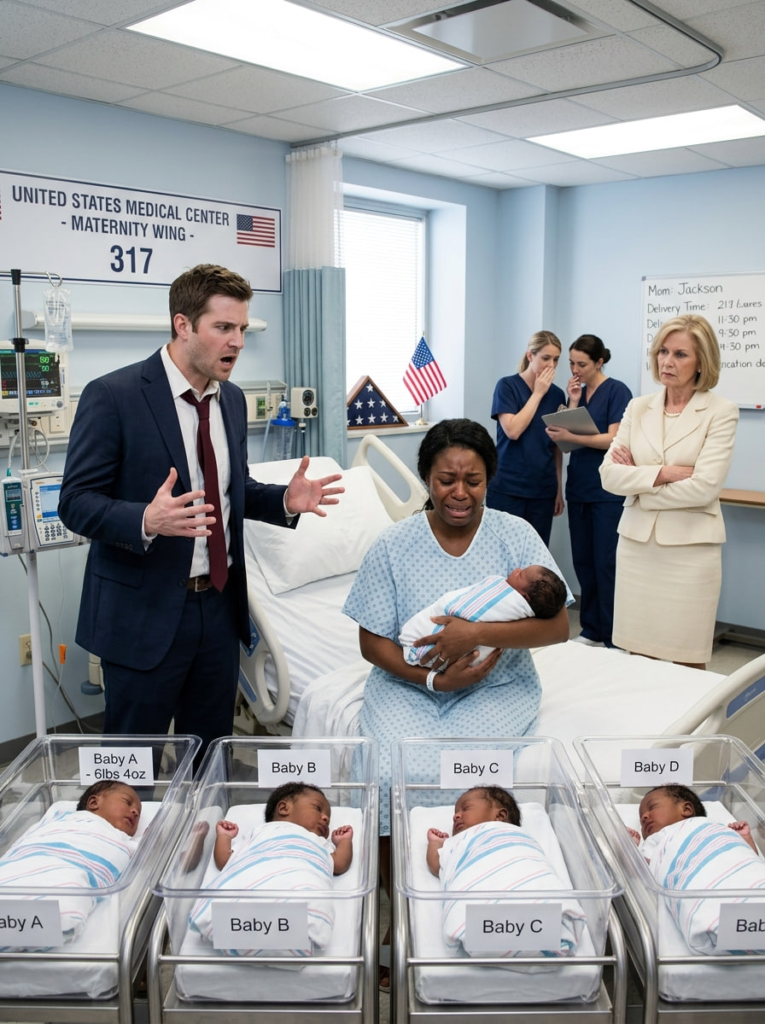
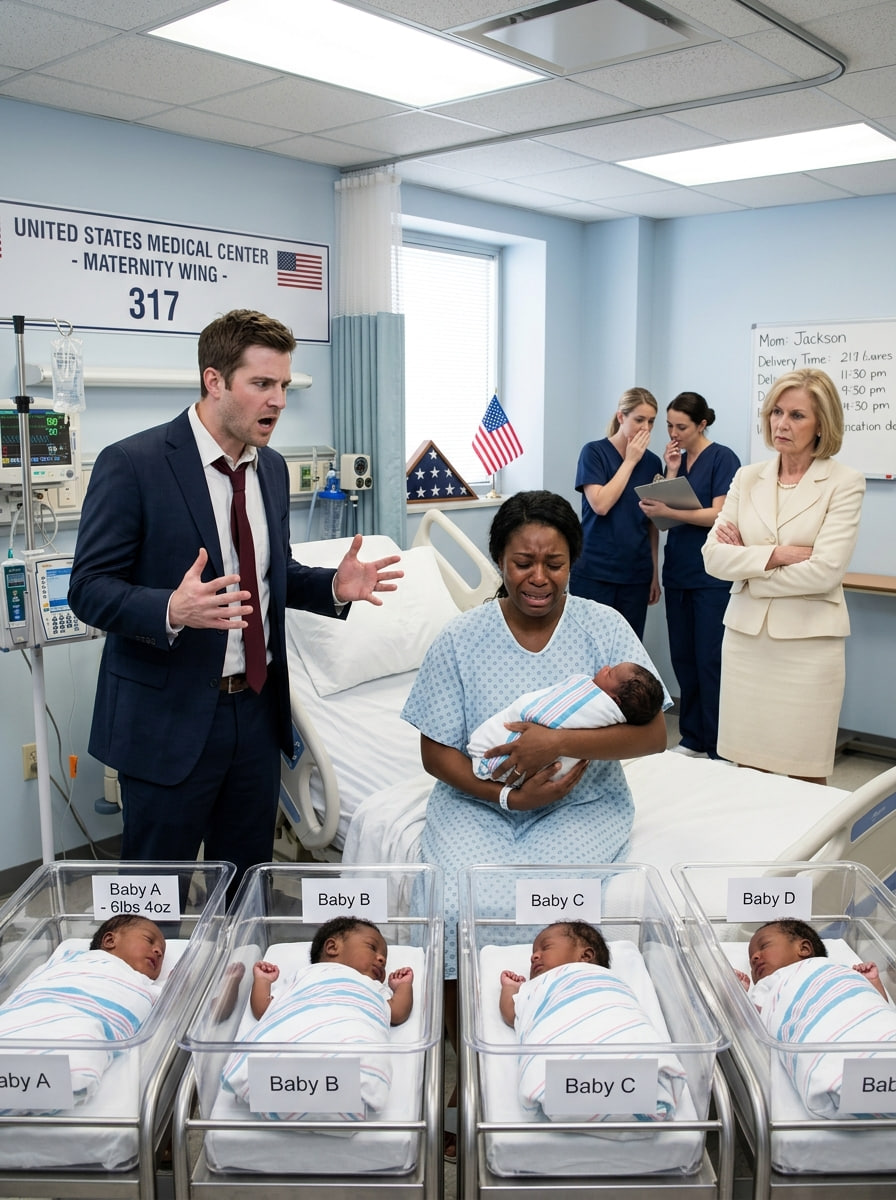
“No. You planned it thirty years ago when you walked out of a hospital.”
For the first time since entering the room, he sat down heavily in one of the leather chairs.
Old age had finally caught him.
Not in wrinkles.
In collapse.
Because arrogance ages people faster than time.
“I made a mistake,” he whispered.
“No,” Naomi said softly. “You made a choice every single day for thirty years.”
That landed harder than shouting ever could.
Benjamin looked around the room again, really seeing them now.
Simone with her sharp legal precision.
Elias with his surgeon’s steady hands.
Jordan, whose nonprofit housing projects had rebuilt entire neighborhoods.
Micah, whose financial strategies now controlled half the city’s development contracts.
And Ava—
the little girl whose hand once wrapped around my finger in that hospital bassinet—
now a federal judge.
Five extraordinary human beings.
Five lives built without him.
Benjamin’s eyes filled suddenly.
“I missed everything.”
Nobody answered.
Because there was nothing left to say about that.
You cannot return to a childhood after it finishes.
You cannot arrive thirty years late and still call yourself a father.
Then the conference room doors opened again.
Everyone turned.
Victoria Whitmore entered slowly with the assistance of a silver cane.
Age had reduced her elegance to something brittle.
But her eyes—
Those were unchanged.
Sharp.
Calculating.
She stopped the moment she saw the documents spread across the table.
Then she saw the DNA report in Benjamin’s hands.
And finally—
She looked at my children.
All five standing together.
The truth she had buried staring directly back at her.
Victoria’s face lost color.
“No,” she breathed.
Simone answered before I could.
“Yes.”
For several seconds, nobody moved.
Then Victoria straightened her spine with visible effort.
“This can still be handled privately.”
Ava, the judge, almost smiled.
“That sentence explains everything wrong with this family.”
Victoria ignored her.
She looked at me instead.
“What do you want?”
It was astonishing.
After thirty years, she still thought this was about money.
I stood slowly from my chair.
Every child beside me rose too.
Not one of them remained seated while I stood.
And in that moment, I realized something beautiful:
Benjamin had given them his blood.
But none of them had inherited his weakness.
I looked directly at Victoria.
“What do I want?”
My voice stayed calm.
“I want you to understand something before this meeting ends.”
I stepped closer to the table.
“You thought abandonment would destroy us.”
I glanced proudly at my children.
“But all you really did was remove yourselves from the privilege of knowing them.”
Victoria’s jaw tightened.
Benjamin stared at the floor.
And for the first time in three decades, the Whitmores had nothing left to weaponize.
No lies.
No reputation.
No money.
Because the five babies they discarded had grown into people so powerful that the truth no longer needed protection.
Simone closed the hospital file gently.
“You can leave now,” she said.
Benjamin looked up quickly.
As if he expected mercy at the last second.
“Please,” he whispered. “Can we try again?”
My youngest daughter finally spoke.
The room stilled when she did.
Because she had always been the one who kept the birthday cards in the shoebox.
The one who measured absence.
She looked at Benjamin with quiet, devastating honesty.
“We already became a family,” she said.
Then she opened the conference room door for him.
And thirty years after walking away from five newborn children—
Benjamin Whitmore walked out alone again.